

MarketMuse is a capable platform, but it’s not the right fit for every team. The pricing is custom and unpublished, the learning curve is real, and the feature set is built for enterprise content strategy at a scale most teams simply don’t need. If you’re looking for something more focused, more affordable, or easier to get writers using on day one, tools like Surfer SEO, Clearscope, and Frase are strong alternatives.
This guide covers the eight best MarketMuse alternatives in 2026: Surfer SEO, Frase, Clearscope, Content Harmony, NeuronWriter, Dashword, Outranking, and Semrush SEO Writing Assistant, with current pricing verified from each tool’s live pricing page. Each tool is reviewed for what it actually does well, who it’s built for, and where it falls short.
Why Teams Look for MarketMuse Alternatives
Teams don’t leave MarketMuse because it’s a weak product. They leave because it’s more than they need, costs more than they want to spend, or takes longer to set up than their SEO content workflow allows.
No Published Pricing Makes Budgeting Hard
MarketMuse doesn’t publish pricing for its paid plans. The Optimize, Research, and Strategy tiers all require a demo call before you get a number. For teams that need to compare tools quickly or get budget approval, that’s a friction point that often ends the evaluation early.
The free plan does exist: it includes 10 queries per month and one user seat, with no content briefs and no tracked topics. For anything beyond light exploration, you’re booking a call. Every tool on this list publishes pricing clearly on its website, and that alone removes a major friction point in the evaluation process.
The Feature Set Is Broad for Teams Who Only Need Optimization
MarketMuse was built for large-scale content operations: topic modeling, content clusters, inventory auditing, competitive gap analysis across an entire site. These are genuinely useful features for teams managing hundreds of URLs and planning SEO content architecture across an entire domain.
For a team that writes 10 to 20 pieces per month and needs a content grader and brief builder, those features add cost and complexity without adding value. Most alternatives on this list do less, but they do the relevant part well and don’t require an onboarding process to produce useful output on day one.
There’s a Steep Learning Curve
MarketMuse has a lot of product surface. Getting a new writer or editor up to speed takes more time than most simpler tools. Clearscope, Frase, and NeuronWriter all have interfaces that writers can use meaningfully within the first session. The learning curve is measured in hours, not weeks.
What MarketMuse Does Well
MarketMuse is genuinely strong for enterprise content strategy. Its topic modeling is deep, its content inventory and clustering tools are among the best available, and its ability to map topical authority gaps across a site is something most alternatives don’t replicate.
If your team’s primary use case is large-scale content strategy, content gap auditing, or topic cluster planning across hundreds of pages, MarketMuse in that context delivers depth that goes beyond what any optimizer on this list offers. The alternatives below are mostly content optimizers and brief builders. They help you write and grade individual pieces, not plan an entire content architecture.
That distinction matters when you’re choosing a replacement. If you used MarketMuse mainly for content grading and briefs, any tool on this list replaces that use case directly. If you used it for content strategy and clustering, the replacement path is different, and Surfer SEO’s Topical Map feature is the closest single substitute for that capability.
What to Look for in a MarketMuse Alternative
The right alternative depends on which part of the workflow is your bottleneck. These five criteria help narrow the choice for any SEO content team.
Content Optimization Quality
The core function of any MarketMuse alternative is scoring content against live SERP competition. Look for tools that use NLP-based term analysis, not just keyword density. Surfer SEO, Clearscope, and NeuronWriter all use semantic analysis to build their content scores; simpler tools like Dashword rely on more basic term frequency checks. For competitive SEO content in tight niches, the depth of the underlying analysis matters.
Brief Creation and Research
Some tools only grade existing content. Others help you research and plan before writing. If brief creation is where you spend time, tools like Frase and Content Harmony offer research workflows built into the brief process, not added as an afterthought. A good brief should cover competitor headings, recommended subtopics, search intent signals, and internal link suggestions, not just a keyword list.
Pricing Transparency
All eight alternatives on this list publish their pricing clearly online. If you can’t see a price without booking a demo, you’re back to the MarketMuse problem. That’s why pricing transparency matters for team budget discussions: a content team that can evaluate options independently gets to a decision faster.
Ease of Adoption
A tool your writers don’t use isn’t a tool. Clearscope’s letter-grade interface is the fastest to onboard: most writers understand it within minutes. Frase and Surfer take a session or two to get comfortable. Tools with fuller SEO content workflows (like Outranking) take more setup time but reward teams that invest in the process. Match the complexity to your team’s appetite for learning new software.
Integration and Workflow Fit
Check whether the tool connects to the platforms your team already uses: Google Docs, WordPress, Google Search Console. Most tools here offer at least one of these integrations. NeuronWriter and Surfer SEO both have direct WordPress integrations, which matters for teams publishing directly from the optimizer. Semrush Writing Assistant connects to both Google Docs and WordPress and draws on Semrush’s keyword database directly, making it uniquely valuable for teams already in that ecosystem.
Quick Comparison: MarketMuse Alternatives at a Glance
Here’s how the main alternatives compare on price and primary use case before getting into the detail.
| Tool | Starting Price | Best For | Free Trial |
|---|---|---|---|
| MarketMuse | Custom pricing | Enterprise content strategy | Free plan (10 queries/month) |
| Surfer SEO | $49/month (annual) | Real-time content scoring | No |
| Frase | $49/month | Research + optimization combo | No |
| Clearscope | $129/month | Simple content grading | No |
| Content Harmony | $50/month | Brief-focused teams with multiple writers | Free workflow |
| NeuronWriter | $23/month | Budget-conscious teams | Free plan (2 projects) |
| Dashword | $99/month | Content teams needing fast volume reports | No |
| Outranking | Check website | Automated brief-to-draft workflow | No |
| Semrush Writing Assistant | Included with Semrush from $139.95/month | Teams already on Semrush | 7-day trial |
The 8 Best MarketMuse Alternatives
1. Surfer SEO
Surfer SEO is the most direct replacement for MarketMuse’s content grader. It scores drafts against live SERP data, gives writers a clear optimization target, and surfaces the terms and topics that top-ranking pages cover. The workflow is fast: paste or write in the editor, watch the score update in real time.
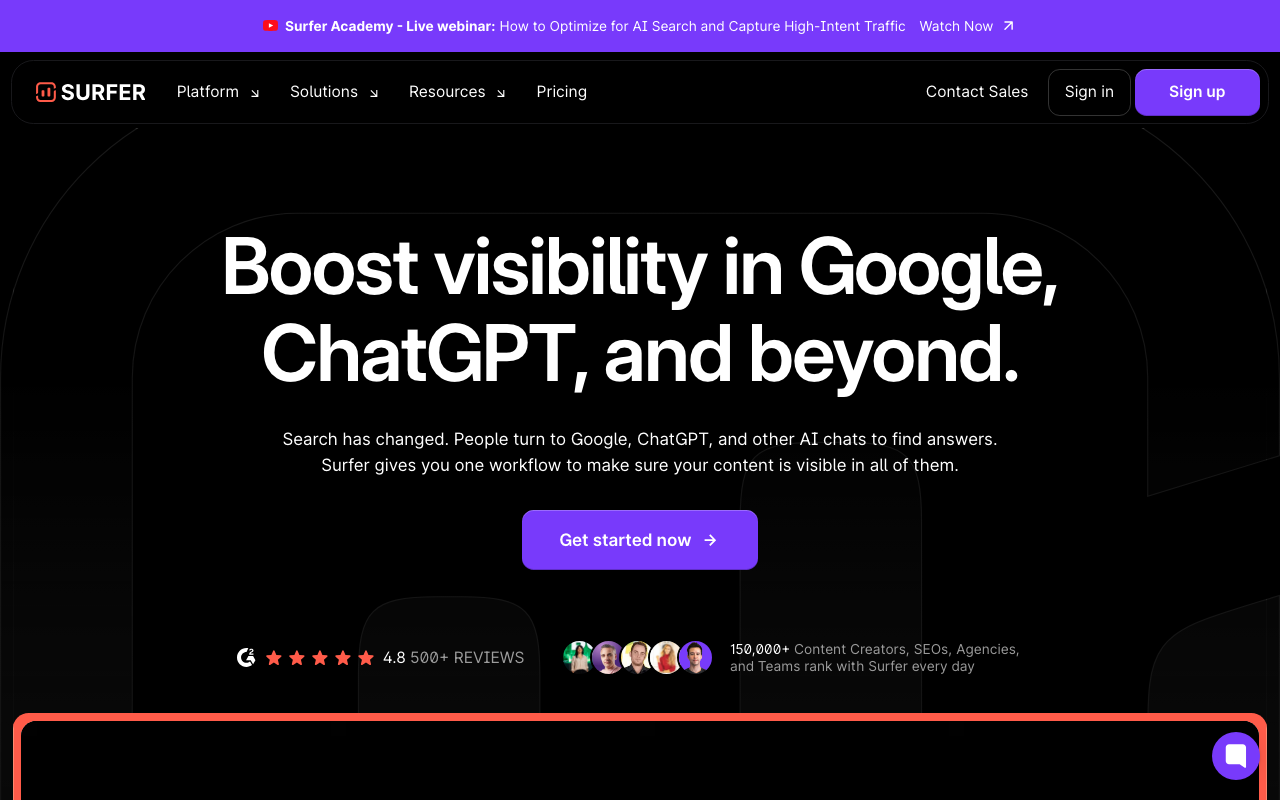
Where MarketMuse builds topic models across a site, Surfer focuses on getting a single piece of SEO content right. That narrower focus is exactly what most teams need day-to-day. The Content Editor is the core: it shows your content score, a ranked list of terms to include, word count benchmarks from top-ranking pages, and a structure guide based on competitor headings.
Surfer’s SERP Analyzer lets you reverse-engineer any top-ranking URL, breaking down word count, NLP terms, headings, and backlink patterns. Writers can connect the Content Editor directly to Google Docs and optimize without switching applications. For existing content, the Audit tool scores pages you want to update, and it’s useful for teams working through a large content backlog.
Surfer also has a Topical Map feature for content cluster planning, which brings it closer to MarketMuse’s strategy toolset than any other optimizer on this list. The Keyword Research tool adds another layer for teams who want to plan topic coverage before writing. For teams running a full SEO content operation from research to publishing, Surfer’s ecosystem is the most complete alternative here.
Pricing
| Plan | Monthly | Annual |
|---|---|---|
| Discovery | $69/month | $49/month |
| Standard | $149/month | $99/month |
| Pro | $249/month | $182/month |
| Peace of Mind | $399/month | $299/month |
The entry plan at $49/month (annual) gives 120 documents and one seat. Standard jumps to 360 documents and three seats. Pro adds 200 tracked pages and five brand workspaces, the starting point for teams managing multiple client accounts.
Best for: SEO writers and content teams who want a fast, scoring-driven workflow with strong SERP analysis and Google Docs integration.
2. Frase
Frase is the best choice for teams where research and writing happen close together. It pulls SERP data, extracts competitor headings and topics, generates content briefs, and then lets writers optimize in the same interface. MarketMuse covers some of this, but spreads it across more product areas and a more complex interface.
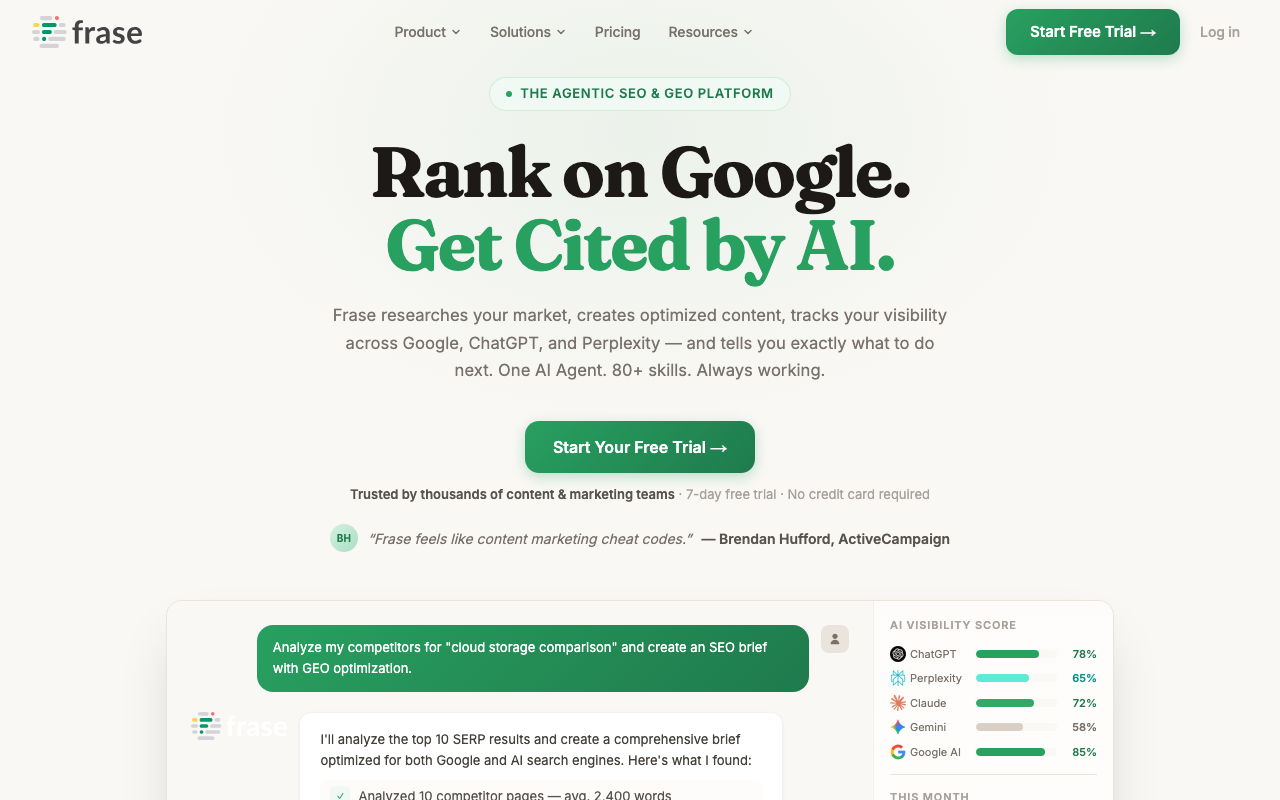
The brief workflow is Frase’s strongest feature: you enter a keyword, and within a few minutes have a researched outline with competitor headings, key questions from People Also Ask and forums, and the most common subtopics across top-ranking pages. Writers can edit the outline and then write directly in the same document, with the SEO content score updating as they go.
The AI writing features in Frase are solid but secondary to the research and optimization core. Where it earns its place is in cutting the time from keyword to brief: a task that takes 20-30 minutes manually takes 5 minutes in Frase.
Frase added AI visibility tracking in recent versions, which monitors where your content appears in AI-generated answers. For teams thinking about search generative experience and GEO alongside traditional SEO, that’s a useful data layer not found in most alternatives.
Pricing
| Plan | Monthly | Annual |
|---|---|---|
| Starter | $49/month | $39/month |
| Professional | $129/month | $103/month |
| Scale | $299/month | $239/month |
The entry plan covers 10 AI-optimized articles per month with one user seat. The Professional plan at $129/month covers 40 articles and three seats, which works for most small SEO content teams.
Best for: Solo writers and small teams who want research, brief creation, and content optimization in one tool.
3. Clearscope
Clearscope‘s interface is the simplest of everything on this list. Writers see a letter grade, a term list, and a word count target. There’s no complexity to work around and no learning curve to speak of. You paste your draft, check the terms you’re missing, add them naturally, and watch the grade improve.
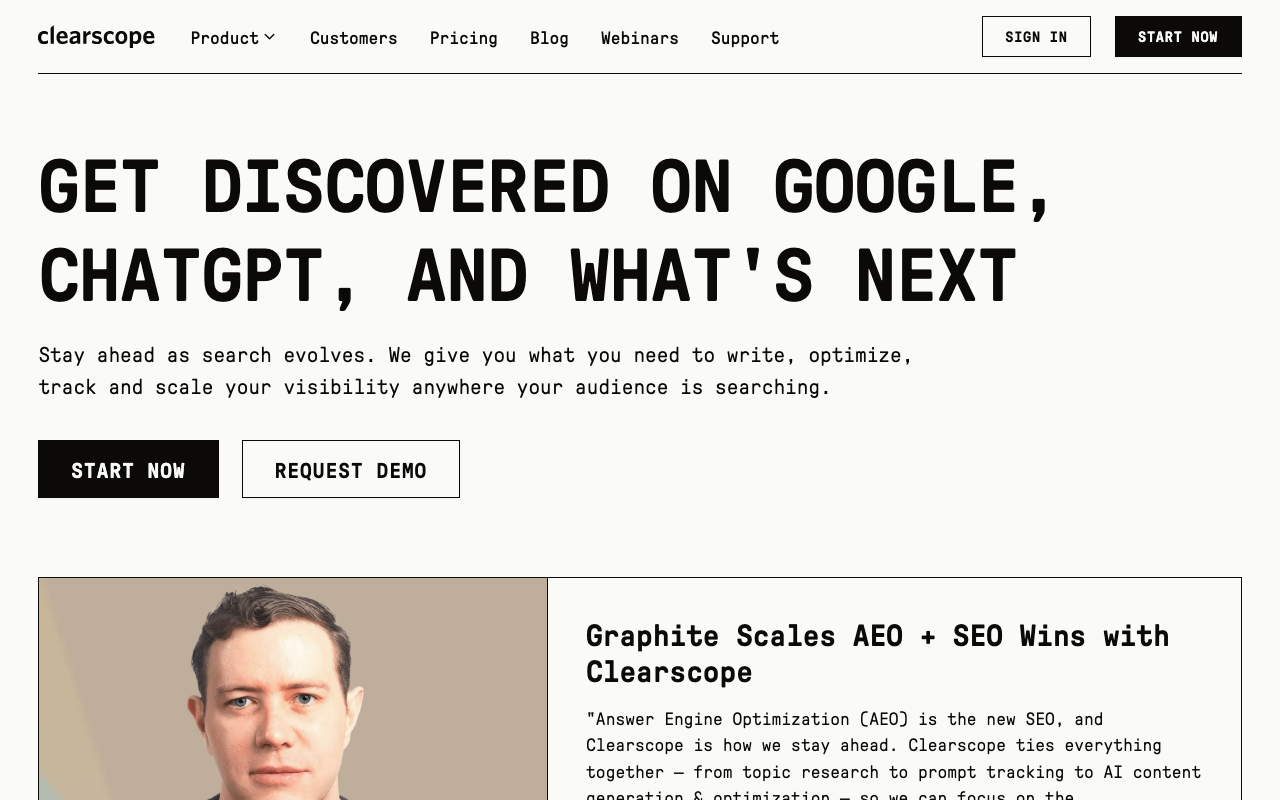
That simplicity is a real advantage for content teams with writers at different skill levels. The onboarding conversation is short: “You’re aiming for a B+ or higher. Here’s the term list.” That’s it. Writers who have never used an SEO content tool can be productive on their first piece.
Clearscope generates its grading from Google’s NLP API, which means the term recommendations are semantically meaningful, not just frequency-based. The tool identifies related terms, synonyms, and conceptually adjacent topics that top-ranking pages cover, not just variations of the exact keyword.
The brief feature lets you research competitor content and build a recommended outline before writing. Clearscope is built around the content brief and optimization workflow, not content strategy at scale. It doesn’t do topic modeling, content inventory, or cluster planning. It does content grading, and it does it cleanly.
All Clearscope plans include unlimited users, which makes it strong for larger content teams where per-seat pricing at other tools adds up fast.
Pricing
| Plan | Monthly |
|---|---|
| Essentials | $129/month |
| Business | $399/month |
| Enterprise | Custom |
The Essentials plan includes 20 tracked topics, 50 pages, and 20 monthly drafts. All plans include unlimited users. No annual discount is listed on the pricing page.
Best for: Content teams that need a clean, low-friction optimizer that any writer can use immediately, with unlimited users on every plan.
4. Content Harmony
Content Harmony is built around the brief, not the grade. The focus is on producing a high-quality content outline from SERP analysis before a word is written, which is a different workflow than tools that optimize after drafting.
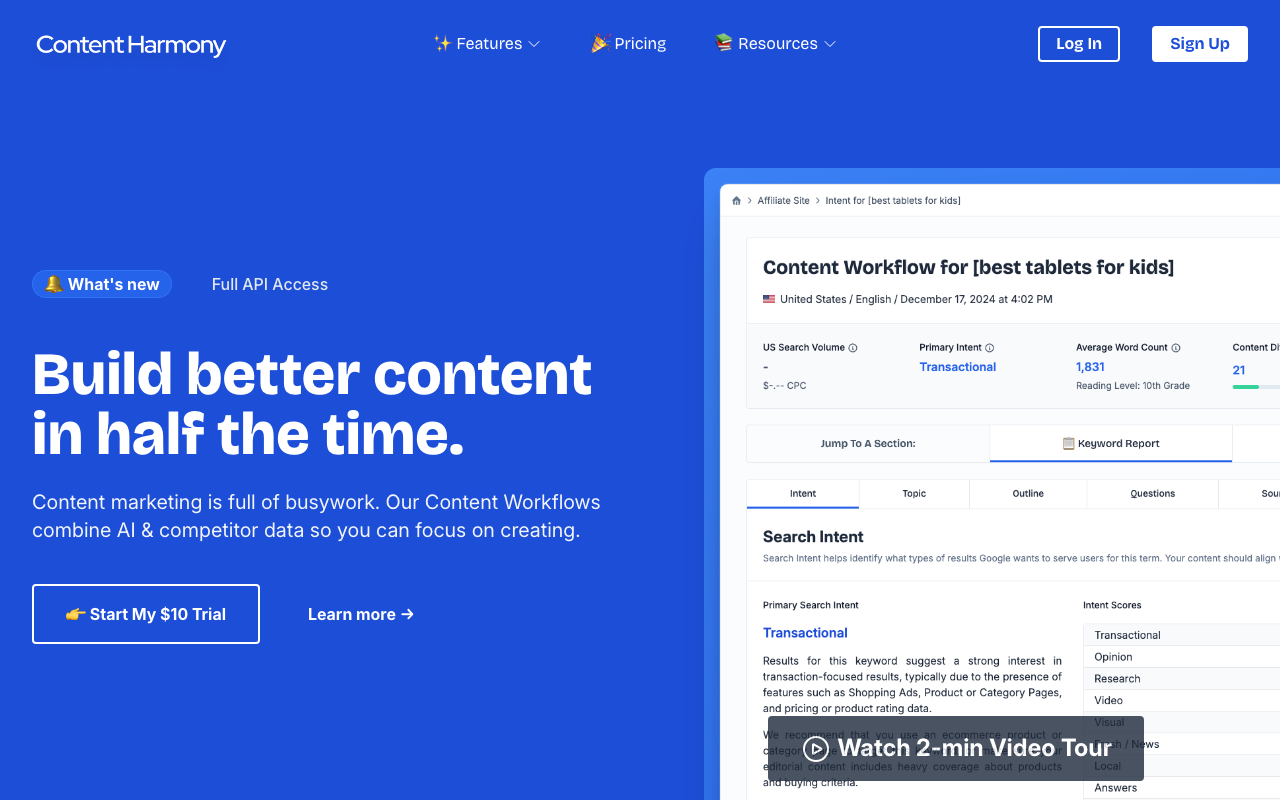
The brief covers search intent classification, competitor headings, recommended subtopics, internal link suggestions, and content questions worth answering. Writers work from that brief instead of from a blank page. The SEO content score is available after drafting, but the brief is the centerpiece of the workflow.
What goes into a Content Harmony brief is worth understanding: the tool classifies the query’s search intent (informational, transactional, comparison, etc.), maps the top-ranking pages’ heading structures, identifies the most-covered subtopics across the SERP, and flags questions from People Also Ask and related searches. A writer with that brief in hand doesn’t need to reverse-engineer the SERP themselves.
The unlimited users model is a meaningful differentiator. Clearscope also offers unlimited users, but Content Harmony’s structure is particularly well-suited to teams that need consistency across many writers, since the brief drives the work rather than individual writer judgment. With a well-built brief, a junior writer can produce content that matches what a senior writer would outline independently.
Content Harmony doesn’t have AI writing features. That’s a deliberate choice. The workflow is research, then brief, then human writing, then grading.
Pricing
| Plan | Monthly | Annual | Workflows/Month |
|---|---|---|---|
| Standard-5 | $50/month | $42/month | 5 |
| Standard-12 | $99/month | $89/month | 12 |
| Standard-25 | $199/month | $179/month | 25 |
| Standard-50 | $299/month | $269/month | 50 |
The entry plan at $50/month covers five workflows per month with unlimited users and unlimited projects. Pricing scales by workflow volume, not by seats.
Best for: Content teams with multiple writers where brief quality and consistency are the main bottleneck.
5. NeuronWriter
NeuronWriter is the most affordable capable optimizer on this list. The entry plan starts at $23 per month for 25 content analyses, which covers a lot of ground for freelancers or small teams with modest monthly output.

Content scoring uses NLP-based semantic analysis, not just keyword density. Competitor analysis shows which semantically related terms top-ranking pages include and how often, giving writers a meaningful target. An AI writer’s included across all plans; higher tiers add Google Search Console integration, WordPress integration, and team collaboration features.
The Gold plan at $69/month is where the most useful integrations come in: Google Search Console connection lets you see which queries are already driving traffic to each URL before optimizing, which helps prioritize which content to update first. The WordPress integration means you can push content directly from NeuronWriter to your CMS without switching applications. Shopify integration and API access are also available at this tier, making it useful for e-commerce SEO content teams.
NeuronWriter’s interface isn’t as polished as Surfer or Clearscope, and the AI writing features are functional rather than exceptional. It’s not the prettiest tool on this list. But for teams that need a solid optimizer without paying $100 or more per month, it’s hard to beat at the $23 entry point.
Pricing
| Plan | Monthly | Annual | Analyses |
|---|---|---|---|
| Bronze | $23/month | $19/month | 25 |
| Silver | $45/month | $37/month | 50 |
| Gold | $69/month | $57/month | 75 |
| Platinum | $93/month | $77/month | 100 |
Best for: Freelancers and small teams who need a capable content optimizer at the lowest price point, with WordPress and GSC integration at the mid tier.
6. Dashword
Dashword keeps things simple. A content score, a keyword density target, a brief builder, and a report you can hand to a writer. There’s no AI writing, no complex research workflow, and no steep onboarding. Teams that need to produce a lot of briefs quickly and don’t need deep analysis will find it fits that use case well.
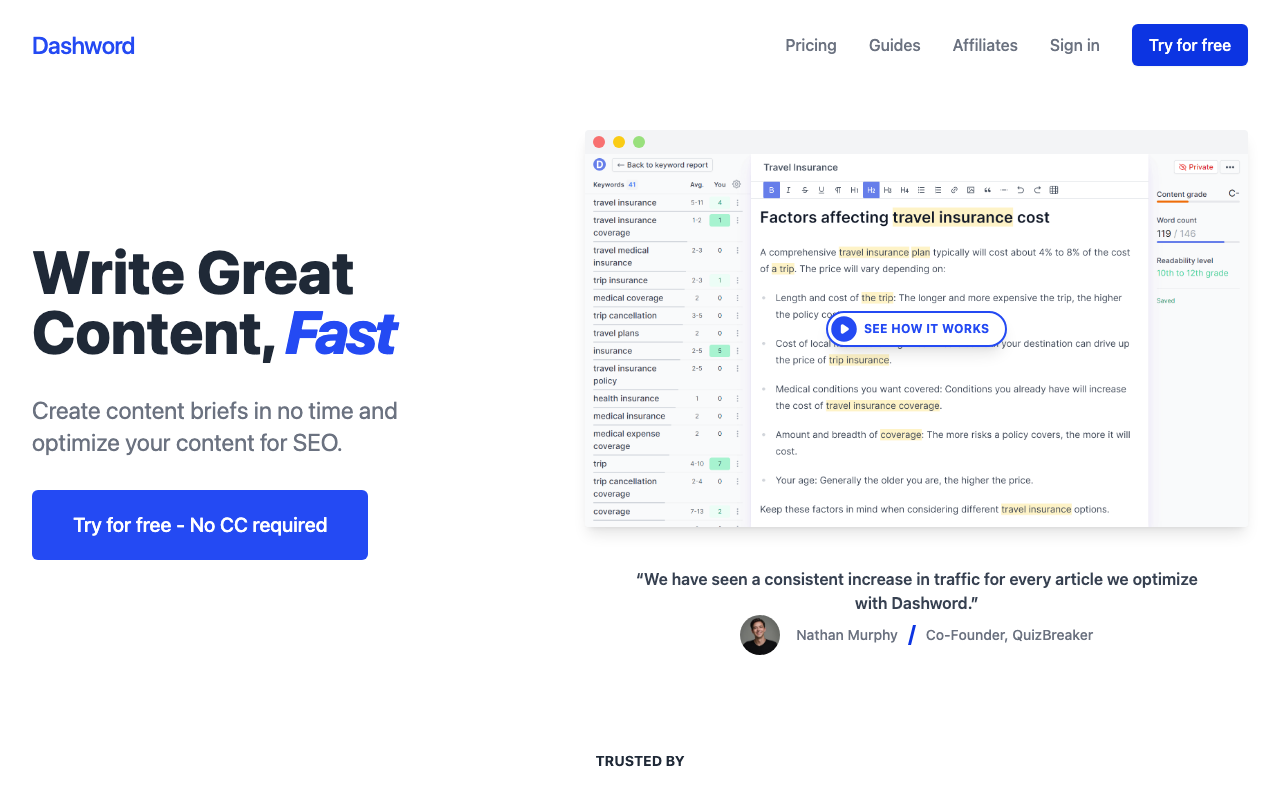
The content report pulls the top-ranking pages for a keyword, analyzes the common terms and topics they cover, and gives a simplified brief with recommended word count and key subtopics. It’s not as deep as Content Harmony’s brief or as semantically rich as Clearscope’s grading, but it’s fast, and most writers can act on the output without additional explanation.
The Startup plan covers 30 content reports per month with five user seats at $99/month. That’s solid value for SEO content teams running moderate volume. The Business plan at $349/month covers 100 reports and adds API access, bulk report creation, and SSO, which is where larger teams and enterprise workflows come in.
Dashword doesn’t match MarketMuse or Surfer on depth. The NLP scoring is lighter, and the briefs are less detailed than Content Harmony’s. The workflow is fast, however, and the output is clean enough for standard optimization tasks. Most teams don’t need deep analysis for every brief they produce.
Pricing
| Plan | Monthly | Annual |
|---|---|---|
| Startup | $99/month | $79/month |
| Business | From $349/month | From $279/month |
Best for: Content teams producing at volume who need fast, uncomplicated briefs and scores without a complex setup.
7. Outranking
Outranking automates more of the brief-to-draft process than any other tool on this list. The platform handles SERP analysis, outline generation, first-draft creation, and on-page optimization in a connected workflow. Teams that want to reduce the manual steps between a keyword and a publishable draft will find the most leverage here.
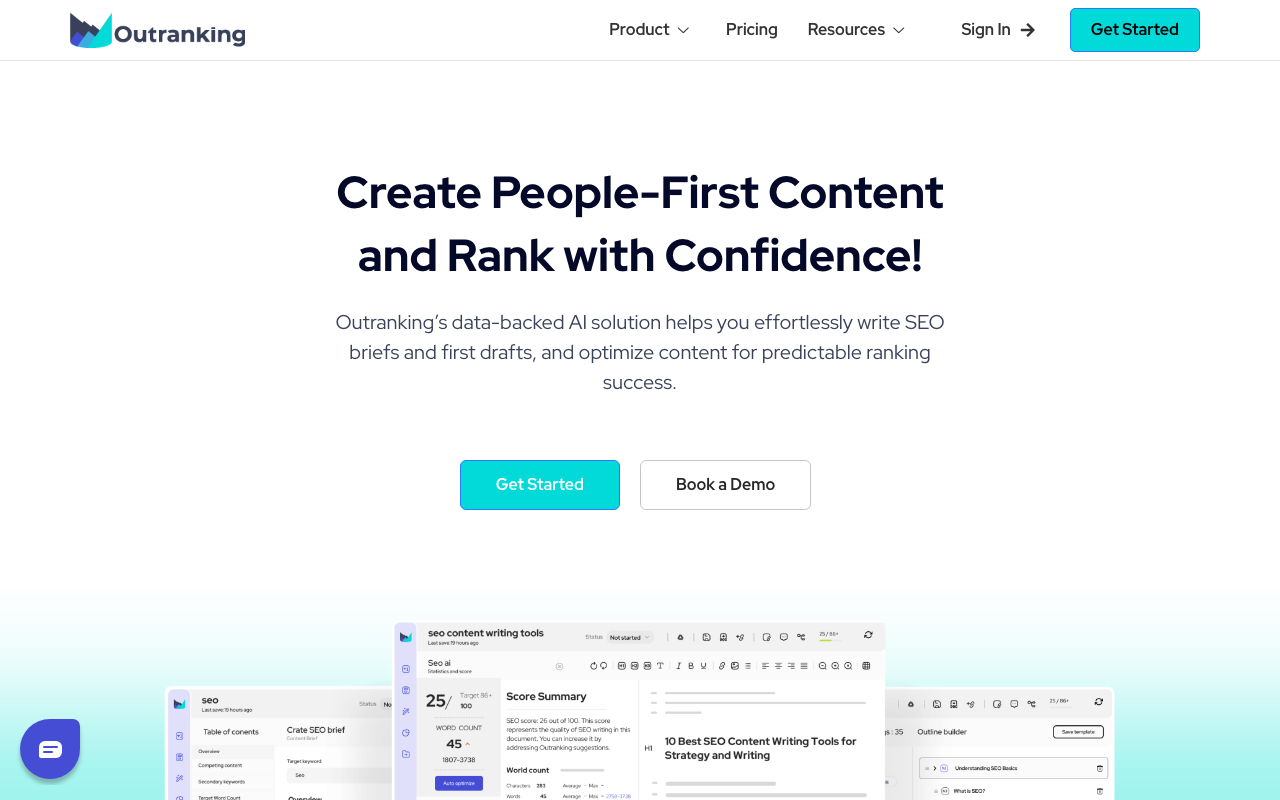
Outranking’s SERP research feature pulls competitor content, classifies search intent, and recommends a heading structure before writing begins. First-draft generation uses that structure as a foundation, so the AI output’s more aligned with what’s actually ranking than generic AI writers that start blank. Then the on-page optimizer scores the draft and suggests improvements.
Outranking also includes an internal linking tool that scans your existing content and suggests where to link from and to, which addresses a common gap in pure optimizer tools. The content planning feature for mapping topics across a site brings it closer to MarketMuse’s strategy toolset than most alternatives here.
The trade-off is setup time. Outranking has more configuration options than simpler tools, and getting consistent output takes some tuning of templates and brand voice settings. It’s not for teams who want to run a brief on day one. For teams willing to build a defined SEO content workflow around it, the automation payoff is real.
For current pricing, check outranking.io directly. Pricing details were not publicly listed at the time of this review.
Best for: Teams that want maximum automation from keyword to draft, and are willing to invest setup time for a more connected SEO content workflow.
8. Semrush SEO Writing Assistant
Semrush‘s SEO Writing Assistant is not a standalone tool. It’s included in all paid Semrush plans, starting with the Pro tier at $139.95 per month. For teams already paying for Semrush, it adds content optimization at no additional cost.
The Writing Assistant scores SEO content in real time, checks for readability, tone consistency, and plagiarism alongside SEO optimization. It connects to Google Docs and WordPress, and draws on Semrush’s keyword and SERP data directly, so the optimization recommendations are grounded in the same keyword database you’re already using for research.
The integration benefit is real: you can research a keyword in Semrush, identify the target query and related terms, then open the Writing Assistant and have those terms pre-loaded as optimization targets. The handoff between keyword research and content optimization happens inside one platform, which removes a friction point for teams that currently switch between tools for those two tasks.
It doesn’t match the depth of dedicated content optimizers. The brief creation features are lighter than Content Harmony or Frase, and the scoring is simpler than Surfer or Clearscope. But for teams already in the Semrush ecosystem, it covers the basics without another monthly subscription.
Pricing: Included in Semrush Pro ($139.95/month), Guru ($249.95/month), and Business plans. No standalone plan is available.
Best for: Teams already using Semrush who want content optimization without adding another tool to the stack.
How to Choose the Right MarketMuse Alternative
The right choice depends on which part of your workflow is the actual bottleneck. Here are the five most common decision paths.
If you need real-time on-page scoring
Go with Surfer SEO or Clearscope. Surfer gives more depth and SERP analysis; Clearscope is simpler and faster to onboard. Both score SEO content against live SERP data and give writers a clear optimization target. If your team includes writers at different experience levels, Clearscope’s letter-grade system is easier to explain and faster to act on.
If your bottleneck is research and brief creation
Frase or Content Harmony. Frase does both research and optimization in one workflow, which is useful when the same person researches and writes. Content Harmony focuses entirely on the brief and is better for teams with many writers who need consistent brief quality. The brief drives the work rather than individual writer judgment.
If budget is the main constraint
NeuronWriter at $23/month is the best capable optimizer at the lowest price. Frase’s annual entry plan at $39/month is a close second with better research features. Both include NLP-based scoring, not stripped-down keyword frequency tools.
If you manage a large team with multiple writers
Clearscope or Content Harmony. Both offer unlimited users without per-seat charges. Content Harmony’s brief-driven workflow scales better when many writers need consistent starting points. Clearscope’s simplicity reduces onboarding friction when the team includes writers who haven’t used SEO content tools before.
If you already use Semrush
The SEO Writing Assistant is already in your plan. Use it for standard SEO content optimization tasks and supplement with Frase or NeuronWriter if you need more depth on individual pieces.
Need-Based Shortlist
| If your priority is… | Best choice | Why |
|---|---|---|
| Real-time content scoring | Surfer SEO | Deepest SERP analysis; Content Editor connects to Google Docs |
| Simplest possible onboarding | Clearscope | Letter-grade system any writer understands immediately |
| Research + brief + optimization | Frase | Keyword to brief to draft in one interface |
| Brief quality and team consistency | Content Harmony | SERP-research brief with unlimited users; no per-seat cost |
| Lowest price | NeuronWriter | $23/month with NLP-based scoring and AI writer |
| Highest output volume | Dashword | 30 reports/month at $99; scales to 100 at Business tier |
| Automated brief-to-draft | Outranking | Most connected workflow from keyword to published content |
| No new tools | Semrush Writing Assistant | Already included with Semrush Pro and above |
One distinction worth keeping in mind: MarketMuse operates as both an optimizer and a content strategy tool. Most alternatives here operate at the optimizer level only. If you used MarketMuse primarily for topic cluster planning, content inventory, and topical authority mapping across a full site, none of the tools above fully replicate that capability. Surfer’s Topical Map feature gets closest. For that level of content strategy depth, look specifically for tools built for topical authority planning alongside individual content scoring.
Keeping Content Fresh After You Optimize It
Every tool above solves the same first problem: getting a piece of content into good shape before or right after it’s written. None of them solve what happens six months later, when the page has slipped in rankings, the facts are stale, or a competitor has published something more complete. Most content teams still handle that part by hand: pull a list of underperforming URLs, rewrite them, republish, and hope the update moves the needle.
Contentforce is built specifically for that second problem. It connects to WordPress, analyzes existing posts against the current live SERP, and generates a concrete update plan rather than a fresh content score. Edits go through a side-by-side diff with full version history before anything publishes, so a team can review exactly what changed instead of trusting an automated rewrite. It isn’t a substitute for MarketMuse’s topic modeling or for the optimizers above during initial drafting, but it’s a fit for teams whose bottleneck is refreshing an existing content library at scale, not writing new pages from scratch.
Frequently Asked Questions
Is there a free MarketMuse alternative?
NeuronWriter offers a free plan with two projects and limited analyses. MarketMuse itself has a free plan limited to 10 queries per month with no content briefs and no tracked topics. For teams that need more than light exploration, NeuronWriter’s free tier is the most functional no-cost option on this list.
What is the cheapest MarketMuse alternative?
NeuronWriter starts at $23 per month on the entry plan, which includes 25 content analyses. Frase’s annual entry plan works out to $39 per month. Both are capable SEO content optimizers with NLP-based scoring, not stripped-down basic tools.
Does MarketMuse have a free plan?
Yes. MarketMuse’s free plan includes 10 queries per month, one user seat, and access to the Topic Navigator and Keywords tools. Content briefs, tracked topics, and Strategy Documents are not included in the free tier. Paid plans require a demo to get pricing, and no dollar amounts are published for any paid tier.
Which MarketMuse alternative is best for content teams managing multiple accounts?
Dashword and Surfer SEO handle multi-account work well. Dashword’s Startup plan covers 30 content reports per month across five users at $99/month. Surfer’s Standard and Pro plans include team seats and brand workspaces designed for managing multiple client accounts or content properties.
Is Surfer SEO a good replacement for MarketMuse?
For content grading and on-page optimization, yes. Surfer’s Content Editor is a direct replacement for MarketMuse’s optimization workflow and is easier to use for most writers day-to-day. If you used MarketMuse specifically for topic cluster planning and content strategy at scale, Surfer’s Topical Map feature covers some of that need, but isn’t a complete replacement for MarketMuse’s strategy tools.
What is the difference between a content optimizer and a content strategy tool?
A content optimizer helps you improve a single piece of SEO content for a target keyword: scoring your draft against SERP competitors, surfacing missing topics, and guiding writers toward better term coverage. Tools like Surfer, Clearscope, and Frase are optimizers.
A content strategy tool plans what to write across an entire site: topic clusters, topical authority gaps, content inventory, and competitive content mapping at scale. MarketMuse in its full form operates at both levels, as an optimizer and a planning platform. Most alternatives on this list operate at the optimizer level. If you need strategy-level planning, look specifically for tools that include topical authority mapping alongside individual content scoring.
