
90-Day Entity SEO Action Plan
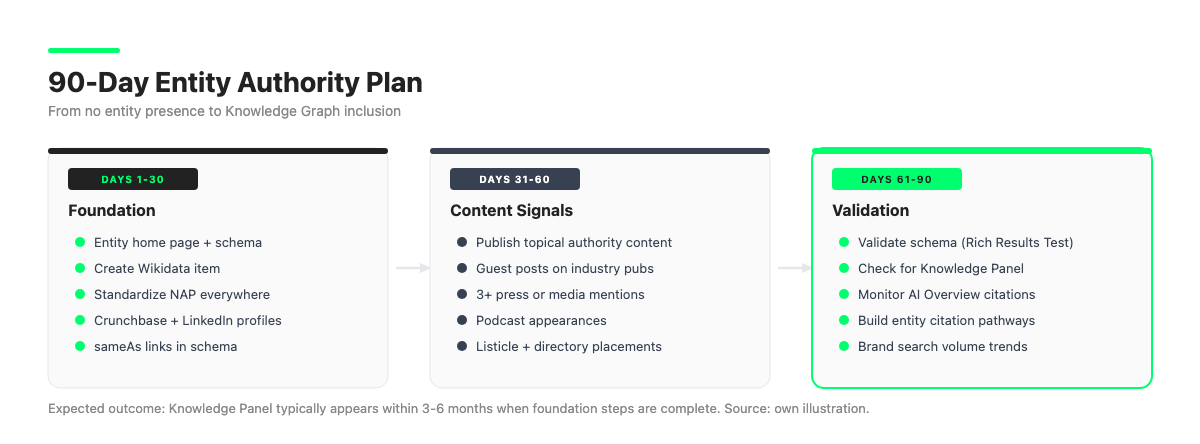
This is a realistic timeline for moving from no entity presence to an established Knowledge Graph entity:
Days 1 to 30: Foundation
- Create or audit your entity home page with complete Organization schema and sameAs properties
- Create a Wikidata item with all required properties
- Standardize your NAP across all existing directory listings
- Submit to Crunchbase, LinkedIn company page, and any applicable industry registries
Days 31 to 60: Content Signals
- Publish at least one in-depth piece of content that establishes your topical authority
- Pitch guest posts or commentary pieces to authoritative publications in your space
- Build at least three press or media mentions that include your brand name alongside key attributes
Days 61 to 90: Validation and Monitoring
- Validate all structured data with the Rich Results Test
- Check Google’s Knowledge Graph API for your entity (search your brand name; look for a Knowledge Panel appearing)
- Monitor AI Overviews for branded and category-level queries
- Identify the top-ranked entity-linked resources in your topic and build citation pathways to them
Frequently Asked Questions About Knowledge Graphs
How long does it take to get a Knowledge Panel? There is no fixed timeline. Most brands that complete the foundation steps (Wikidata entry, sameAs schema, off-site mentions) see a Knowledge Panel appear within three to six months, though this varies considerably by industry and brand prominence.
Can small brands get into Google’s Knowledge Graph? Yes. The Knowledge Graph is not limited to large brands or celebrities. Any entity that can be consistently described across multiple authoritative sources is eligible for Knowledge Graph inclusion. Wikidata is the most accessible entry point for smaller entities without Wikipedia coverage.
Is the Knowledge Graph the same as the Knowledge Panel? No. The Knowledge Graph is Google’s internal database. The Knowledge Panel is the visible box in search results that surfaces information from that database. Not every entity in the Knowledge Graph gets a Knowledge Panel, but all Knowledge Panels draw from the Knowledge Graph.
Does structured data guarantee Knowledge Graph inclusion? No. Structured data is a strong signal, but inclusion depends on whether Google can corroborate your entity data across multiple independent sources. Schema markup combined with Wikidata, off-site mentions, and directory listings is far more effective than schema alone.
How do AI Overviews use the Knowledge Graph? Google’s AI Overviews are generated using a combination of the Knowledge Graph (for entity facts) and high-authority web content (for contextual information). Brands with confirmed entity status in the Knowledge Graph are more likely to be cited in AI Overviews for queries about their topic area.
Step 4: Build Brand Mentions Off-Site
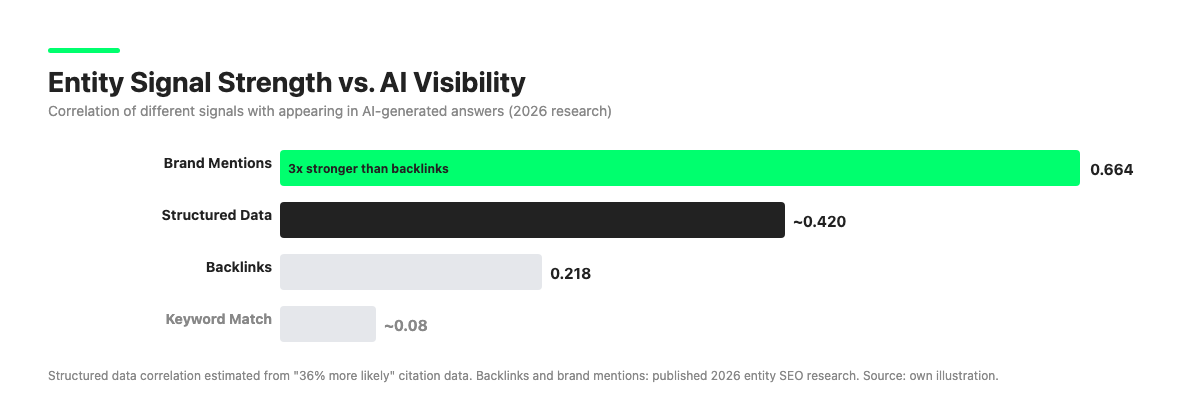
The 0.664 correlation between brand mentions and AI visibility is one of the most significant numbers in entity SEO. Brand mentions contribute to what researchers call “entity confidence”: Google’s internal probability that its entity record is accurate.
Effective brand mention sources include:
- Industry publications that cover your space
- Podcast appearances and transcripts
- Press mentions (even without links)
- Listicle placements in tools roundups and industry guides
- Speaker profiles, conference appearances
- Partner and client testimonials on third-party sites
Brand mentions without links still count. The goal is to have your entity name appear alongside your defining attributes (what you do, who you serve, where you are based) in content that Google considers authoritative.
Step 5: Maintain NAP Consistency
NAP stands for Name, Address, Phone. For any entity with a physical or organizational address, Google uses NAP consistency across directories as an entity validation signal. Inconsistent name formats, different addresses, or different phone numbers create entity ambiguity.
Choose a canonical name format and address and apply it identically across every directory listing, social profile, and business registration.
Tracking Your Entity Progress
Entity signals are not measured with the same tools as keyword rankings. Useful proxy metrics include:
- Whether your brand triggers a Knowledge Panel for branded queries
- Whether your brand appears in AI Overviews for queries about your topic area
- The number of authoritative third-party sites that mention your brand name
- Whether Google’s Rich Results Test recognizes your Organization or Person schema as valid
- Brand name search volume trends (a proxy for brand recognition)
Knowledge Graph inclusion is not announced. You discover it by observing Knowledge Panels appearing, your entity being cited in AI Overviews, and Google returning accurate structured answers for queries about your brand.
90-Day Entity SEO Action Plan
This is a realistic timeline for moving from no entity presence to an established Knowledge Graph entity:
Days 1 to 30: Foundation
- Create or audit your entity home page with complete Organization schema and sameAs properties
- Create a Wikidata item with all required properties
- Standardize your NAP across all existing directory listings
- Submit to Crunchbase, LinkedIn company page, and any applicable industry registries
Days 31 to 60: Content Signals
- Publish at least one in-depth piece of content that establishes your topical authority
- Pitch guest posts or commentary pieces to authoritative publications in your space
- Build at least three press or media mentions that include your brand name alongside key attributes
Days 61 to 90: Validation and Monitoring
- Validate all structured data with the Rich Results Test
- Check Google’s Knowledge Graph API for your entity (search your brand name; look for a Knowledge Panel appearing)
- Monitor AI Overviews for branded and category-level queries
- Identify the top-ranked entity-linked resources in your topic and build citation pathways to them
Frequently Asked Questions About Knowledge Graphs
How long does it take to get a Knowledge Panel? There is no fixed timeline. Most brands that complete the foundation steps (Wikidata entry, sameAs schema, off-site mentions) see a Knowledge Panel appear within three to six months, though this varies considerably by industry and brand prominence.
Can small brands get into Google’s Knowledge Graph? Yes. The Knowledge Graph is not limited to large brands or celebrities. Any entity that can be consistently described across multiple authoritative sources is eligible for Knowledge Graph inclusion. Wikidata is the most accessible entry point for smaller entities without Wikipedia coverage.
Is the Knowledge Graph the same as the Knowledge Panel? No. The Knowledge Graph is Google’s internal database. The Knowledge Panel is the visible box in search results that surfaces information from that database. Not every entity in the Knowledge Graph gets a Knowledge Panel, but all Knowledge Panels draw from the Knowledge Graph.
Does structured data guarantee Knowledge Graph inclusion? No. Structured data is a strong signal, but inclusion depends on whether Google can corroborate your entity data across multiple independent sources. Schema markup combined with Wikidata, off-site mentions, and directory listings is far more effective than schema alone.
How do AI Overviews use the Knowledge Graph? Google’s AI Overviews are generated using a combination of the Knowledge Graph (for entity facts) and high-authority web content (for contextual information). Brands with confirmed entity status in the Knowledge Graph are more likely to be cited in AI Overviews for queries about their topic area.
Why the Knowledge Graph Matters for SEO in 2026
Entity recognition in the Knowledge Graph has direct effects on three types of search visibility:
Traditional Search Results
Entities with confirmed Knowledge Graph status tend to earn sitelinks, Knowledge Panels, and richer SERP features. They are also more likely to appear for related queries where the text match is weak but the entity match is strong.
AI Overviews Citations
Google’s AI Overviews are generated from the Knowledge Graph and high-authority sources. Industry research from 2026 shows that 92% of AI Overview citations come from pages that already rank in the top 10. But among similar-ranking pages, those with better entity signals are cited more often. Pages with complete structured data are approximately 36% more likely to appear in AI-generated summaries.
Knowledge Panel Visibility
A Knowledge Panel gives your brand a fixed presence in search results that is not dependent on ranking for any single keyword. For branded queries, a Knowledge Panel significantly increases click-through rates and builds brand trust.
How to Build Your Entity Authority
Step 1: Create an Entity Home Page
Your entity home page is the single authoritative page that defines your brand or person as an entity. For an organization, this is typically your About page or homepage. For a person, it is your bio or author page.
The entity home page should include:
- Your official name (exactly as it appears on official documents)
- A clear, factual description of what your organization or person does
- Founded date, location, and key people (for organizations)
- Organization schema (or Person schema) with sameAs properties linking to your Wikidata entry, LinkedIn page, Crunchbase listing, and any other authoritative profiles
The sameAs property is the most important link between your on-site entity definition and the off-site sources Google uses to validate it.
Step 2: Get a Wikidata Entry
Wikipedia requires notability, which many brands and individuals cannot demonstrate. Wikidata does not. Wikidata is an openly editable knowledge base that feeds directly into Google’s Knowledge Graph. Creating a Wikidata item for your brand or person is one of the most reliable steps toward Knowledge Graph inclusion.
The screenshot below shows a Wikidata entity entry for Google (Q95), illustrating the structure of a well-formed entity record: official name, Q-number identifier, description, and alternative names.
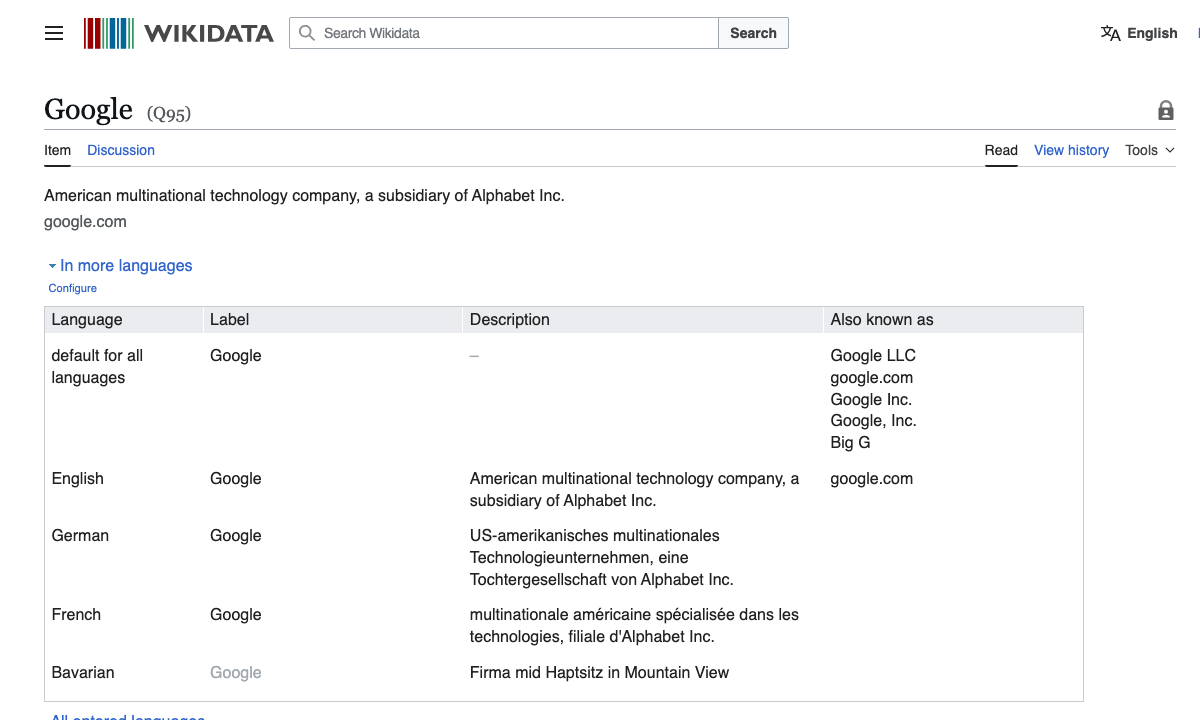
A Wikidata item should include:
- Official name and description
- Instance of (organization, person, website, etc.)
- Inception date and location
- Official website URL
- Social media profiles
Each Wikidata item gets a Q-number identifier, which becomes part of Google’s internal entity ID system.
Step 3: Implement Structured Data with sameAs
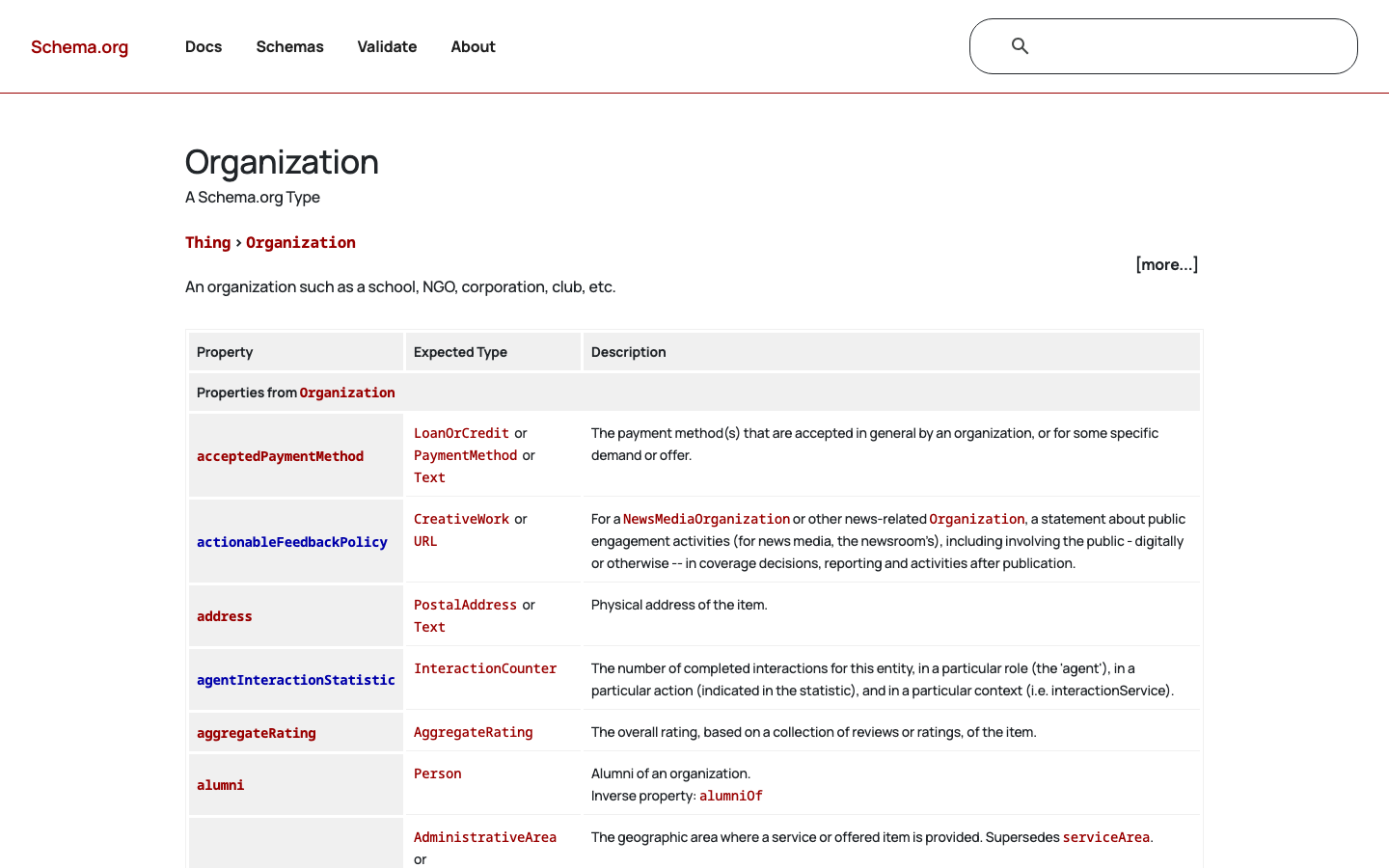
Add Organization or Person schema to your entity home page. The critical properties are:
- name
- url
- logo (for organizations)
- sameAs: an array of URLs pointing to your official profiles on Wikipedia, Wikidata, Crunchbase, LinkedIn, and other authoritative sources
The sameAs array is your explicit instruction to Google that these external profiles all describe the same entity as your website. This cross-platform consistency is how Google validates entity identity.
Step 4: Build Brand Mentions Off-Site
The 0.664 correlation between brand mentions and AI visibility is one of the most significant numbers in entity SEO. Brand mentions contribute to what researchers call “entity confidence”: Google’s internal probability that its entity record is accurate.
Effective brand mention sources include:
- Industry publications that cover your space
- Podcast appearances and transcripts
- Press mentions (even without links)
- Listicle placements in tools roundups and industry guides
- Speaker profiles, conference appearances
- Partner and client testimonials on third-party sites
Brand mentions without links still count. The goal is to have your entity name appear alongside your defining attributes (what you do, who you serve, where you are based) in content that Google considers authoritative.
Step 5: Maintain NAP Consistency
NAP stands for Name, Address, Phone. For any entity with a physical or organizational address, Google uses NAP consistency across directories as an entity validation signal. Inconsistent name formats, different addresses, or different phone numbers create entity ambiguity.
Choose a canonical name format and address and apply it identically across every directory listing, social profile, and business registration.
Tracking Your Entity Progress
Entity signals are not measured with the same tools as keyword rankings. Useful proxy metrics include:
- Whether your brand triggers a Knowledge Panel for branded queries
- Whether your brand appears in AI Overviews for queries about your topic area
- The number of authoritative third-party sites that mention your brand name
- Whether Google’s Rich Results Test recognizes your Organization or Person schema as valid
- Brand name search volume trends (a proxy for brand recognition)
Knowledge Graph inclusion is not announced. You discover it by observing Knowledge Panels appearing, your entity being cited in AI Overviews, and Google returning accurate structured answers for queries about your brand.
90-Day Entity SEO Action Plan
This is a realistic timeline for moving from no entity presence to an established Knowledge Graph entity:
Days 1 to 30: Foundation
- Create or audit your entity home page with complete Organization schema and sameAs properties
- Create a Wikidata item with all required properties
- Standardize your NAP across all existing directory listings
- Submit to Crunchbase, LinkedIn company page, and any applicable industry registries
Days 31 to 60: Content Signals
- Publish at least one in-depth piece of content that establishes your topical authority
- Pitch guest posts or commentary pieces to authoritative publications in your space
- Build at least three press or media mentions that include your brand name alongside key attributes
Days 61 to 90: Validation and Monitoring
- Validate all structured data with the Rich Results Test
- Check Google’s Knowledge Graph API for your entity (search your brand name; look for a Knowledge Panel appearing)
- Monitor AI Overviews for branded and category-level queries
- Identify the top-ranked entity-linked resources in your topic and build citation pathways to them
Frequently Asked Questions About Knowledge Graphs
How long does it take to get a Knowledge Panel? There is no fixed timeline. Most brands that complete the foundation steps (Wikidata entry, sameAs schema, off-site mentions) see a Knowledge Panel appear within three to six months, though this varies considerably by industry and brand prominence.
Can small brands get into Google’s Knowledge Graph? Yes. The Knowledge Graph is not limited to large brands or celebrities. Any entity that can be consistently described across multiple authoritative sources is eligible for Knowledge Graph inclusion. Wikidata is the most accessible entry point for smaller entities without Wikipedia coverage.
Is the Knowledge Graph the same as the Knowledge Panel? No. The Knowledge Graph is Google’s internal database. The Knowledge Panel is the visible box in search results that surfaces information from that database. Not every entity in the Knowledge Graph gets a Knowledge Panel, but all Knowledge Panels draw from the Knowledge Graph.
Does structured data guarantee Knowledge Graph inclusion? No. Structured data is a strong signal, but inclusion depends on whether Google can corroborate your entity data across multiple independent sources. Schema markup combined with Wikidata, off-site mentions, and directory listings is far more effective than schema alone.
How do AI Overviews use the Knowledge Graph? Google’s AI Overviews are generated using a combination of the Knowledge Graph (for entity facts) and high-authority web content (for contextual information). Brands with confirmed entity status in the Knowledge Graph are more likely to be cited in AI Overviews for queries about their topic area.
Google does not rank strings of text anymore. It ranks entities. The Knowledge Graph is the infrastructure behind that shift: a database of real-world things and the relationships between them, now containing over 500 billion facts across more than 5 billion entities.
When your brand, person, or topic exists as a recognized entity in that database, Google surfaces it confidently in search results, Knowledge Panels, and AI Overviews. Without entity recognition, you rely on text matching alone.
What follows is a practical explanation of what the Knowledge Graph is, how it differs from the Knowledge Panel you see in search results, and the concrete steps that build entity authority so Google can recognize and cite you.
What Is a Knowledge Graph?
A knowledge graph is a database of entities and the relationships between them. Entities are distinct, identifiable things: people, organizations, locations, products, concepts, and events. The graph stores not just the entities themselves but the typed connections between them, such as “Satya Nadella is CEO of Microsoft” or “Python is a programming language used for machine learning.”
Google introduced its Knowledge Graph on May 16, 2012, with the explicit goal of moving from “strings to things.” Rather than matching the text in your query against the text on web pages, Google began matching queries against known entities and returning structured facts about them.
By 2020, Google reported 500 billion facts across 5 billion entities. The graph has continued growing. In 2026 it powers not just traditional search results but Google’s AI Overviews, AI Mode, and Gemini-powered answers.
Knowledge Graph vs. Knowledge Panel: What’s the Difference?
The Knowledge Graph is Google’s internal database. You cannot see it directly.
The Knowledge Panel is the box that appears on the right side of search results showing facts about an entity. It is the visible output of the Knowledge Graph.
If you search for a major brand, public figure, or well-known city, you will see a Knowledge Panel showing a summary, key facts, images, and related entities. That panel is Google’s way of surfacing what it knows about that entity from the Knowledge Graph.
Not every entity in the Knowledge Graph gets a Knowledge Panel. Panels appear for entities where Google has enough validated information and where the search context is entity-focused. Between June 2023 and June 2024, the number of Knowledge Panels grew by 4x, suggesting Google is extending entity recognition more broadly.
The distinction matters for SEO because your goal is to get into the Knowledge Graph (the database), not just to earn a Knowledge Panel (the display). The panel follows from confirmed entity status.
What Is an Entity in SEO?
An entity is a thing that Google can uniquely identify, classify, and connect to other things. Each entity in the Knowledge Graph has a machine identifier (called a KGMID), typed properties, and relationship edges to other entities.
Common entity types include:
- Organization (companies, nonprofits, government bodies)
- Person (authors, founders, public figures)
- Place (cities, countries, landmarks)
- Product (software, physical goods)
- Creative work (books, films, articles)
- Concept (abstract topics like “machine learning” or “content marketing”)
From an SEO perspective, your goal is to ensure that your brand or person is recognized as an entity rather than as a keyword-stuffed text pattern. Entity recognition means Google can answer questions about you without relying solely on your own website.
How Google Builds the Knowledge Graph
Google assembles the Knowledge Graph from multiple sources. The diagram below maps the main signal sources and what they power.
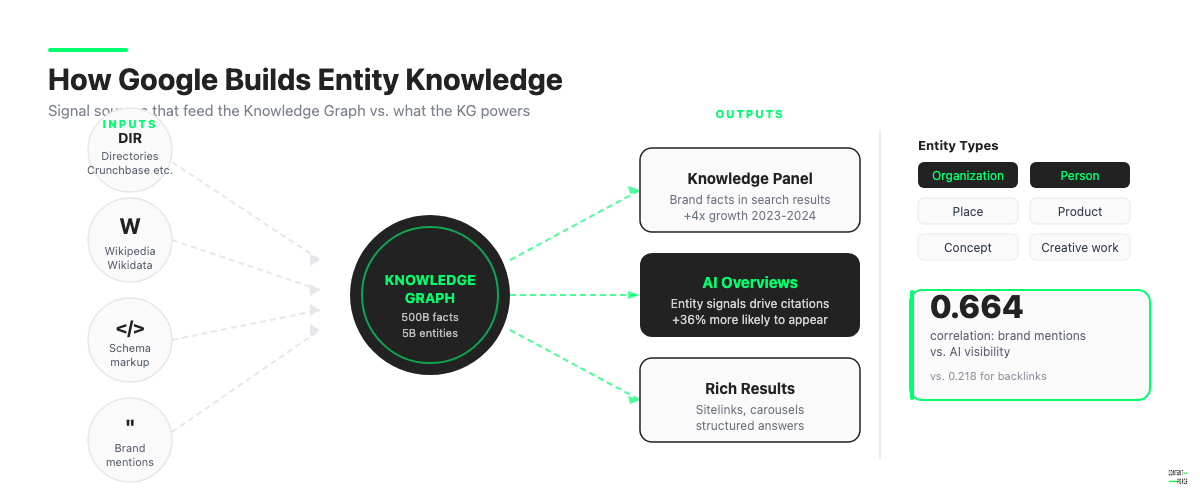
The primary inputs include:
- Wikipedia and Wikidata: Wikipedia provides human-readable articles; Wikidata provides structured, machine-readable data. Both are treated as high-authority sources for entity attributes.
- Structured data (schema markup): When you add Organization, Person, or Product schema to your pages, you give Google explicit, machine-readable facts about your entity. The sameAs property is especially important because it links your entity to its representations on other authoritative platforms.
- Brand mentions across the web: Every time your brand name appears in context on a third-party page, Google updates its confidence about who or what you are. The correlation between brand mentions and AI visibility is 0.664, significantly higher than the correlation for backlinks (0.218).
- Authoritative directories: Crunchbase, LinkedIn company pages, government registries, and industry databases all contribute entity signals.
Google weights sources differently. An entity described consistently and accurately across Wikidata, Wikipedia, and multiple structured data implementations is much more confidently recognized than one described only on its own website.
Why the Knowledge Graph Matters for SEO in 2026
Entity recognition in the Knowledge Graph has direct effects on three types of search visibility:
Traditional Search Results
Entities with confirmed Knowledge Graph status tend to earn sitelinks, Knowledge Panels, and richer SERP features. They are also more likely to appear for related queries where the text match is weak but the entity match is strong.
AI Overviews Citations
Google’s AI Overviews are generated from the Knowledge Graph and high-authority sources. Industry research from 2026 shows that 92% of AI Overview citations come from pages that already rank in the top 10. But among similar-ranking pages, those with better entity signals are cited more often. Pages with complete structured data are approximately 36% more likely to appear in AI-generated summaries.
Knowledge Panel Visibility
A Knowledge Panel gives your brand a fixed presence in search results that is not dependent on ranking for any single keyword. For branded queries, a Knowledge Panel significantly increases click-through rates and builds brand trust.
How to Build Your Entity Authority
Step 1: Create an Entity Home Page
Your entity home page is the single authoritative page that defines your brand or person as an entity. For an organization, this is typically your About page or homepage. For a person, it is your bio or author page.
The entity home page should include:
- Your official name (exactly as it appears on official documents)
- A clear, factual description of what your organization or person does
- Founded date, location, and key people (for organizations)
- Organization schema (or Person schema) with sameAs properties linking to your Wikidata entry, LinkedIn page, Crunchbase listing, and any other authoritative profiles
The sameAs property is the most important link between your on-site entity definition and the off-site sources Google uses to validate it.
Step 2: Get a Wikidata Entry
Wikipedia requires notability, which many brands and individuals cannot demonstrate. Wikidata does not. Wikidata is an openly editable knowledge base that feeds directly into Google’s Knowledge Graph. Creating a Wikidata item for your brand or person is one of the most reliable steps toward Knowledge Graph inclusion.
The screenshot below shows a Wikidata entity entry for Google (Q95), illustrating the structure of a well-formed entity record: official name, Q-number identifier, description, and alternative names.
A Wikidata item should include:
- Official name and description
- Instance of (organization, person, website, etc.)
- Inception date and location
- Official website URL
- Social media profiles
Each Wikidata item gets a Q-number identifier, which becomes part of Google’s internal entity ID system.
Step 3: Implement Structured Data with sameAs
Add Organization or Person schema to your entity home page. The critical properties are:
- name
- url
- logo (for organizations)
- sameAs: an array of URLs pointing to your official profiles on Wikipedia, Wikidata, Crunchbase, LinkedIn, and other authoritative sources
The sameAs array is your explicit instruction to Google that these external profiles all describe the same entity as your website. This cross-platform consistency is how Google validates entity identity.
Step 4: Build Brand Mentions Off-Site
The 0.664 correlation between brand mentions and AI visibility is one of the most significant numbers in entity SEO. Brand mentions contribute to what researchers call “entity confidence”: Google’s internal probability that its entity record is accurate.
Effective brand mention sources include:
- Industry publications that cover your space
- Podcast appearances and transcripts
- Press mentions (even without links)
- Listicle placements in tools roundups and industry guides
- Speaker profiles, conference appearances
- Partner and client testimonials on third-party sites
Brand mentions without links still count. The goal is to have your entity name appear alongside your defining attributes (what you do, who you serve, where you are based) in content that Google considers authoritative.
Step 5: Maintain NAP Consistency
NAP stands for Name, Address, Phone. For any entity with a physical or organizational address, Google uses NAP consistency across directories as an entity validation signal. Inconsistent name formats, different addresses, or different phone numbers create entity ambiguity.
Choose a canonical name format and address and apply it identically across every directory listing, social profile, and business registration.
Tracking Your Entity Progress
Entity signals are not measured with the same tools as keyword rankings. Useful proxy metrics include:
- Whether your brand triggers a Knowledge Panel for branded queries
- Whether your brand appears in AI Overviews for queries about your topic area
- The number of authoritative third-party sites that mention your brand name
- Whether Google’s Rich Results Test recognizes your Organization or Person schema as valid
- Brand name search volume trends (a proxy for brand recognition)
Knowledge Graph inclusion is not announced. You discover it by observing Knowledge Panels appearing, your entity being cited in AI Overviews, and Google returning accurate structured answers for queries about your brand.
90-Day Entity SEO Action Plan
This is a realistic timeline for moving from no entity presence to an established Knowledge Graph entity:
Days 1 to 30: Foundation
- Create or audit your entity home page with complete Organization schema and sameAs properties
- Create a Wikidata item with all required properties
- Standardize your NAP across all existing directory listings
- Submit to Crunchbase, LinkedIn company page, and any applicable industry registries
Days 31 to 60: Content Signals
- Publish at least one in-depth piece of content that establishes your topical authority
- Pitch guest posts or commentary pieces to authoritative publications in your space
- Build at least three press or media mentions that include your brand name alongside key attributes
Days 61 to 90: Validation and Monitoring
- Validate all structured data with the Rich Results Test
- Check Google’s Knowledge Graph API for your entity (search your brand name; look for a Knowledge Panel appearing)
- Monitor AI Overviews for branded and category-level queries
- Identify the top-ranked entity-linked resources in your topic and build citation pathways to them
Frequently Asked Questions About Knowledge Graphs
How long does it take to get a Knowledge Panel? There is no fixed timeline. Most brands that complete the foundation steps (Wikidata entry, sameAs schema, off-site mentions) see a Knowledge Panel appear within three to six months, though this varies considerably by industry and brand prominence.
Can small brands get into Google’s Knowledge Graph? Yes. The Knowledge Graph is not limited to large brands or celebrities. Any entity that can be consistently described across multiple authoritative sources is eligible for Knowledge Graph inclusion. Wikidata is the most accessible entry point for smaller entities without Wikipedia coverage.
Is the Knowledge Graph the same as the Knowledge Panel? No. The Knowledge Graph is Google’s internal database. The Knowledge Panel is the visible box in search results that surfaces information from that database. Not every entity in the Knowledge Graph gets a Knowledge Panel, but all Knowledge Panels draw from the Knowledge Graph.
Does structured data guarantee Knowledge Graph inclusion? No. Structured data is a strong signal, but inclusion depends on whether Google can corroborate your entity data across multiple independent sources. Schema markup combined with Wikidata, off-site mentions, and directory listings is far more effective than schema alone.
How do AI Overviews use the Knowledge Graph? Google’s AI Overviews are generated using a combination of the Knowledge Graph (for entity facts) and high-authority web content (for contextual information). Brands with confirmed entity status in the Knowledge Graph are more likely to be cited in AI Overviews for queries about their topic area.
