
Tool list
GEO Tools: What They Measure and How They Differ

GEO tools measure how often AI engines mention a brand, but the eight platforms compared here, including Profound, AthenaHQ, Otterly.ai, Peec AI, and Semrush AI Toolkit, differ sharply in prompt data source, refresh cadence, and attribution tracking. That methodology gap explains why two tools can report different visibility scores for the same brand.
- From
- $25/mo
Price from the vendor's pricing page, checked Sep 28, 2026.
Every generative engine optimization tool claims to track “AI visibility,” but the underlying methodology varies more than the marketing pages let on. Some tools query real chatbots with real prompts every day. Others estimate volume from a proprietary model and refresh weekly or monthly. A few blend in consumer-panel survey data instead of live AI responses at all. Those differences aren't cosmetic. They change what the numbers in your dashboard actually mean, and they're the reason two GEO tools can report wildly different visibility scores for the same brand in the same month.
This guide breaks down what GEO tools measure, the four mechanics that separate one tool's numbers from another's, and how eight of the category's most-referenced platforms differ once you look past the pricing page.
What does a GEO tool actually measure?
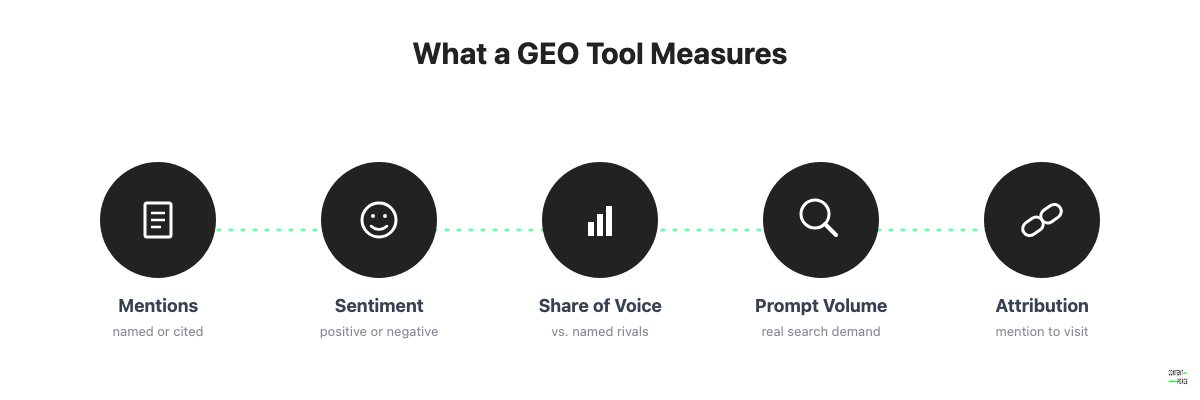
A GEO tool tracks how often, and how favorably, an AI engine mentions your brand when it answers a relevant prompt. That covers five overlapping measurement dimensions:
- Mentions and citations: does the AI name your brand or link to your site in its answer at all
- Sentiment: is the mention positive, neutral, or negative, and does the AI recommend you or a competitor
- Share of voice: how often you show up relative to named competitors across the same prompt set
- Prompt volume: how many real searches touch the topics where your brand could plausibly appear
- Attribution: whether a mention or citation actually drives a session, tracked through server logs or UTM-tagged AI referral traffic
Coverage across AI engines varies by tool. You'll find a handful of platforms on entry-level plans, up to eleven or more on enterprise tiers, spanning ChatGPT, Google AI Overviews, Google AI Mode, Perplexity, Claude, Gemini, Microsoft Copilot, Grok, Meta AI, and DeepSeek. No single tool tracks every engine at every price point, and that's the first thing you'll want to check before comparing two vendors' visibility scores. See our guide to AI visibility for a deeper look at what "getting cited" actually means.
How GEO tools differ in what they measure
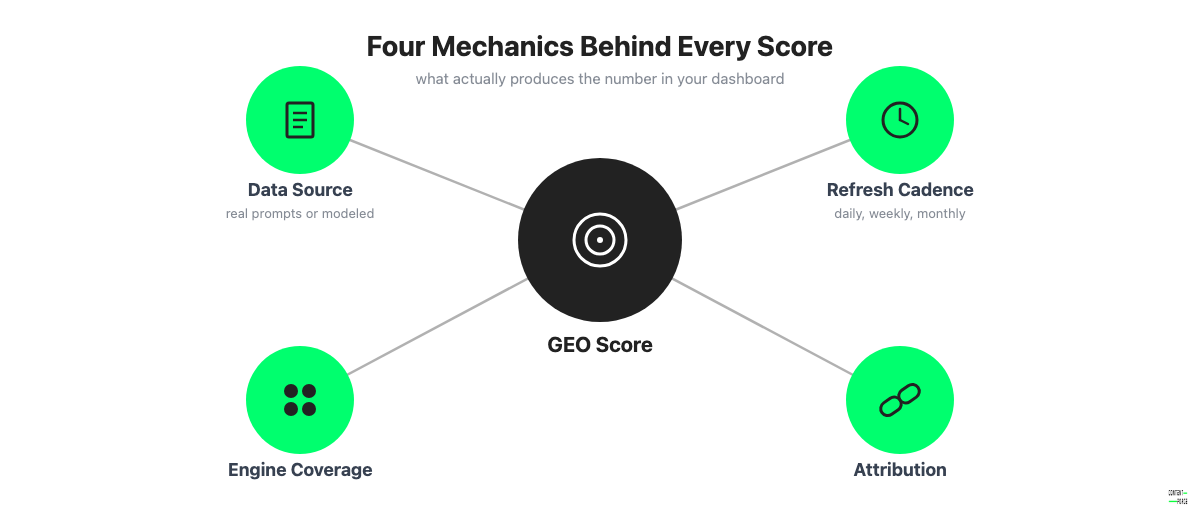
The sticker price is, frankly, the least useful number on a GEO tool's pricing page. What actually determines whether the data's trustworthy is the data source behind it.
Tools split into four broad approaches. Some run real, observed user prompts through live AI engines and record what comes back, which reflects how people actually search rather than how a marketer imagines they'd search. Others reverse-engineer prompts from SEO keyword lists, a faster but less representative method. A few build proprietary statistical models that estimate prompt volume rather than querying engines directly for every data point. And at least one major platform blends AI-response tracking with a large consumer survey panel, adding a layer of human-reported brand perception that pure API-based tools don't have.
Refresh cadence compounds the difference. A tool that re-checks your prompts daily catches a competitor's new product launch or a pricing change within 24 hours. A tool that refreshes monthly can leave you working from six-week-old data without even knowing it.
This is why two GEO tools can report visibility numbers that don't line up for the same brand in the same week. A tool running real, observed prompts against ChatGPT and Perplexity every day will naturally surface more mentions, and more volatility, than a tool that models prompt volume statistically and updates once a month. Neither number is “wrong,” but they're not measuring the same thing with the same precision, and comparing them directly without accounting for the methodology gap is a common mistake when teams switch vendors mid-year and can't explain why the dashboard suddenly looks different.
Attribution is the fourth axis, and it's the one most GEO tools skip entirely. Tracking that your brand got mentioned is one thing; tying that mention to an actual site visit is another. A handful of platforms, Profound among them, connect visibility data to server-log or CDN-level traffic so you can see whether an AI Overview citation turned into a session. Most tools stop at the mention count and leave attribution to your own analytics setup.
| Tool | Engines tracked | Starting price | Prompt data source | Refresh cadence |
|---|---|---|---|---|
| Profound | Up to 9 (Enterprise) | Free trial; Enterprise custom | Real observed user prompts, cited at 1.9B scale | Daily |
| AthenaHQ | 11 | $295/mo (free tier available) | Proprietary search-volume model, credit-based | Not stated |
| Otterly.ai | 4 core, more as paid add-ons | $29/mo | Tracked search prompts, tiered by volume | Not stated |
| Peec AI | 3 on entry tier, more on higher tiers | Reported from around $95/mo | Custom prompt tracking | Daily |
| SE Visible | 5 | $99/mo | Real AI responses collected and analyzed | Not stated |
| Semrush AI Toolkit | 4, “and more” | Bundled from ~€112.52/mo (SEO plan) | Daily prompt tracking, 50-200 prompts/day by tier | Daily |
| Scrunch | 6 | $250/mo (annual) | Custom + industry prompt sets | Not stated |
| Mangools AI Search Watcher | Not itemized by vendor | Reported from around $15.60/mo standalone; bundled free into higher suite tiers | Not detailed by vendor | Not stated |
Prices and tiers change often in this category, and treating any single figure as a locked-in quote is a mistake. Verify on the vendor's own pricing page before you buy.
SEO Title Generator: eight title tag variations, sized for the SERP and intent-matched. Free, no signup.
GEO tools compared in depth
Profound

Profound measures citation share, response accuracy, and sentiment across up to nine AI engines, including ChatGPT, Perplexity, Google AI Mode, Gemini, Copilot, DeepSeek, Claude, Google AI Overviews, and Exa Search on its Enterprise plan. Its defining feature is prompt sourcing: Profound builds its query set from real, observed user conversations rather than SEO-style reverse-engineered keywords, and the company cites a dataset of 1.9 billion real prompts behind that model.
The free Trial plan runs for 7 days, covers three engines (ChatGPT, Gemini, and Google AI Overviews) with 50 prompts tracked daily, and has no exports, API access, or SSO, so it's a proof of concept rather than an ongoing tracker. Full functionality, including daily tracking, custom prompts, SSO, SOC 2 compliance, and CSV/JSON exports, sits behind the custom-priced Enterprise tier. Best for teams that want the widest engine coverage and are willing to go through a sales conversation to get it.
AthenaHQ
AthenaHQ tracks eleven AI models, including Mistral and Grok alongside the usual ChatGPT, Perplexity, and Gemini set. It doesn't run a fixed daily-refresh crawl; instead it measures prompt volume through a proprietary numerical model. Its credit system is refreshingly literal: one credit equals one AI response monitored, and that's plainly useful when you're budgeting month to month.
The Essential tier is free with a $25 usage credit, roughly 300 credits, enough to trial the platform on a small prompt set. The Starter plan runs $295 a month for 3,600 monthly credits. AthenaHQ also layers in schema and entity tagging as part of its visibility scoring, aimed at giving teams a technical checklist alongside the raw tracking numbers. Best for brands that want the broadest model coverage and a usage-based pricing model instead of a flat prompt cap.
Otterly.ai
Otterly.ai tracks citations across four core engines, ChatGPT, Google AI Overviews, Perplexity, and Microsoft Copilot, with Claude, Google AI Mode, and Gemini available as paid add-ons rather than included by default. That makes it one of the more affordable entry points in the category: the Lite plan starts at $29 a month for 15 search prompts, scaling to Standard at $189 for 100 prompts, Premium at $489 for 400 prompts, and a custom Enterprise tier starting at 1,000 search prompts.
Every tier includes unlimited team members, domain ranking, and multi-country support across more than 50 markets. The API is only available from the Standard tier up, at 2,000 requests a month. Best for smaller teams that want to start cheap and add engine coverage only as they need it, rather than paying for eleven engines from day one.
Peec AI
Peec AI focuses on daily-refreshed prompt tracking with a built-in screenshot audit trail, so you don't have to trust an aggregated number. You can see the exact AI response behind every score. Reported pricing starts around $95 a month for the Starter tier, covering three AI models and fifty prompts, moving up to $245 for Pro and $495 for Advanced or Growth, with meaningful annual-billing discounts on each tier. Peec AI's own pricing page doesn't publish exact figures outside its checkout flow, so treat these as third-party-reported starting points rather than a locked quote.
Higher tiers add multi-country tracking, more projects, and Looker Studio reporting for teams that want to pull the data into their own dashboards. Best for agencies that want daily-refresh reliability and a visual audit trail for client reporting.
SE Visible
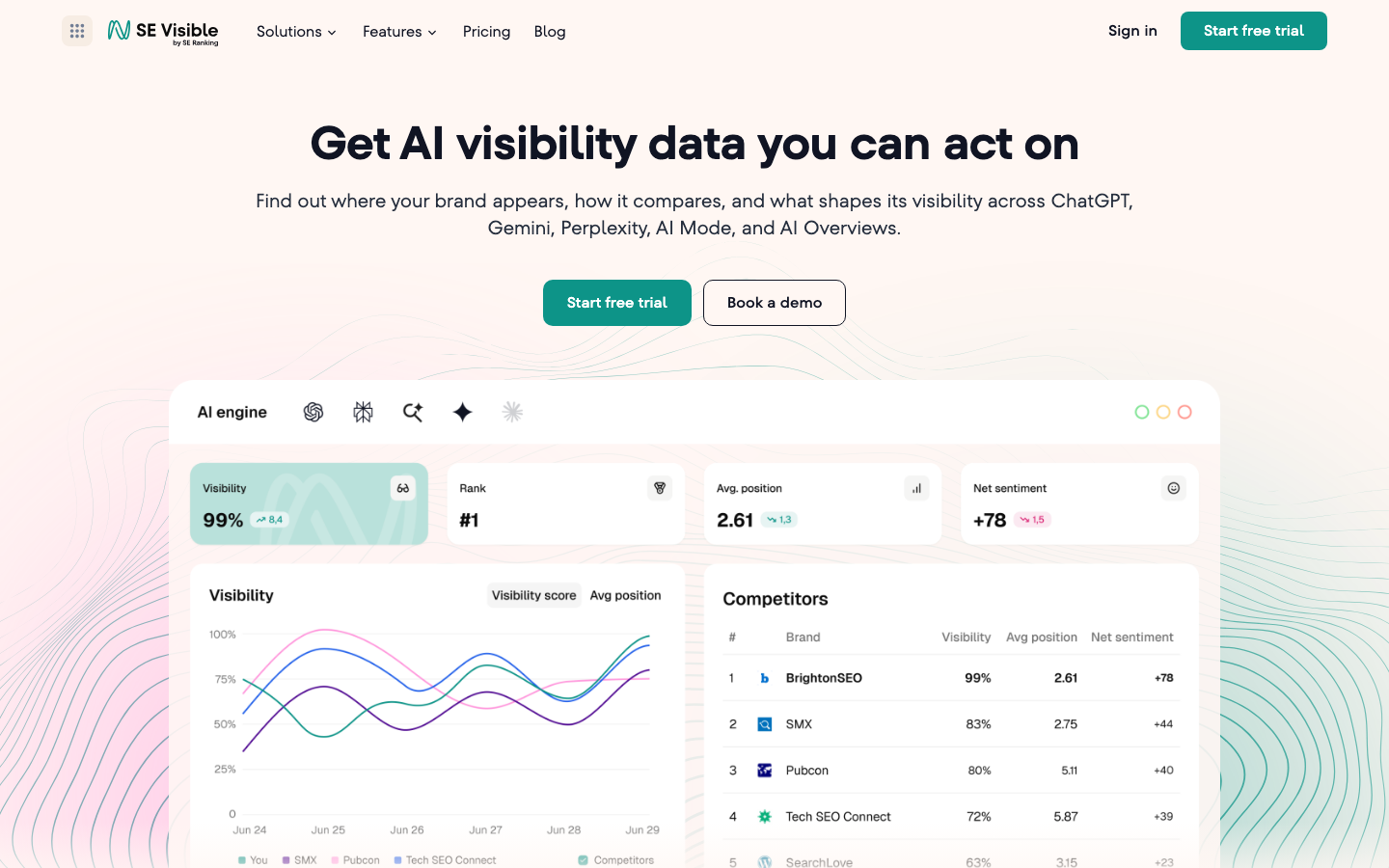
SE Visible, built by SE Ranking, tracks five engines, ChatGPT, Gemini, Google AI Mode, Perplexity, and Google AI Overview, and emphasizes that it analyzes real, collected AI responses rather than simulated ones. The Basic plan runs $99 a month for 200 tracked prompts and roughly 30,000 AI answers analyzed monthly across three projects. Core steps up to $189 for 450 prompts and about 67,500 answers, and Plus reaches $355 for 1,000 prompts and around 150,000 answers.
SE Visible doesn't gate features behind higher tiers; the difference is scale and project count, and a 10-day free trial is available before committing. Best for teams that already know SE Ranking's ecosystem or want transparent, response-count-based pricing.
Semrush AI Toolkit
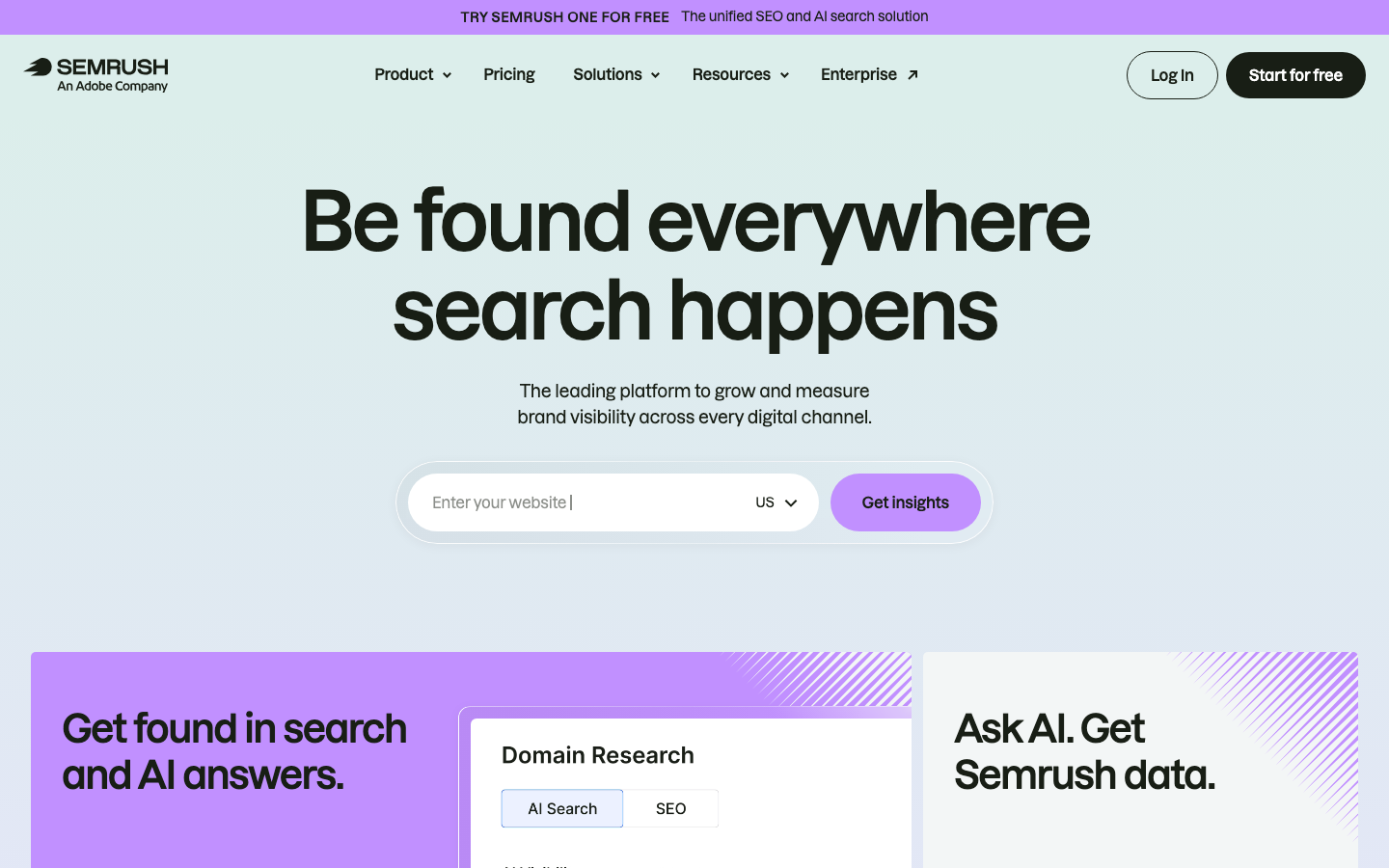
Semrush folded its AI visibility tracking into its standard SEO plans rather than selling it as a separate product, which means the entry point is whatever you already pay for Semrush. The SEO plan starts around €112.52 a month (annual billing) with basic AI visibility features, while Starter and above unlock daily prompt tracking, from 50 prompts a day up to 200 on the Advanced tier, spanning Google Search, ChatGPT, Perplexity, and Gemini.
Semrush restructured its whole plan lineup in 2026, moving from the old Pro/Guru/Business names to SEO/Starter/Pro+/Advanced, and pricing shifted from flat USD to EUR-denominated tiers in the process. If you're comparing an older review of Semrush's pricing against this one, expect it to be stale. Best for teams already inside the Semrush ecosystem who want AI visibility bundled with keyword research and site auditing rather than a standalone bill.
Scrunch
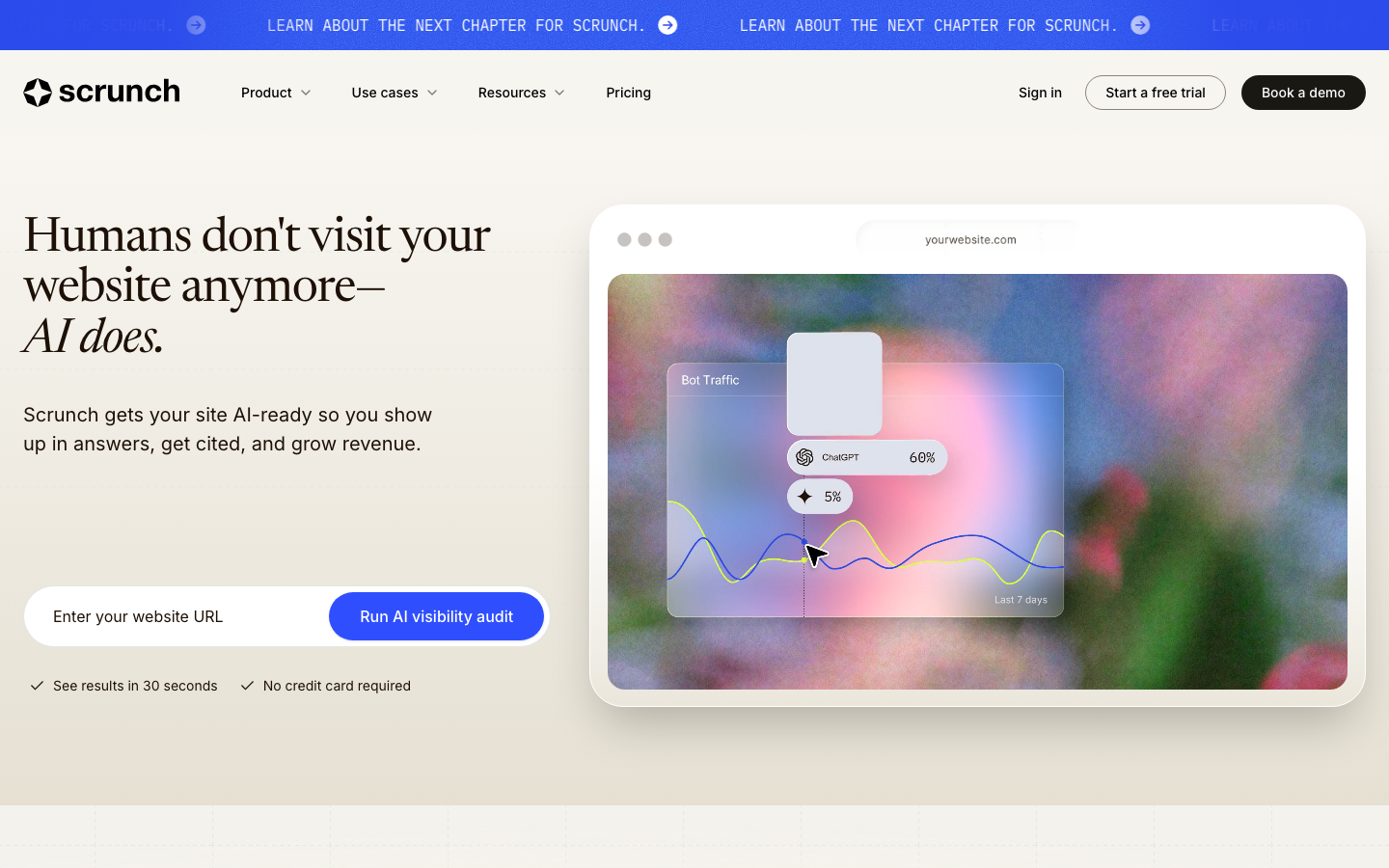
Scrunch, formerly branded Scrunch AI and now part of Sitecore, tracks six engines: ChatGPT, Claude, Gemini, Perplexity, Google AI Mode and AI Overviews, and Meta. The Starter plan runs $250 a month on annual billing (or $300 month-to-month) for 350 custom prompts plus 1,000 industry-baseline prompts, five page audits, three personas, and three user licenses. Growth moves to $417 a month annually for a larger allocation, with Enterprise available at custom pricing.
The Sitecore acquisition is recent enough that some independent reviews still refer to the product under its old “Scrunch AI” name, which is worth knowing if you're cross-referencing older comparison articles. Best for mid-market and enterprise teams that want persona-based prompt tracking alongside page-level audit tooling.
Mangools AI Search Watcher
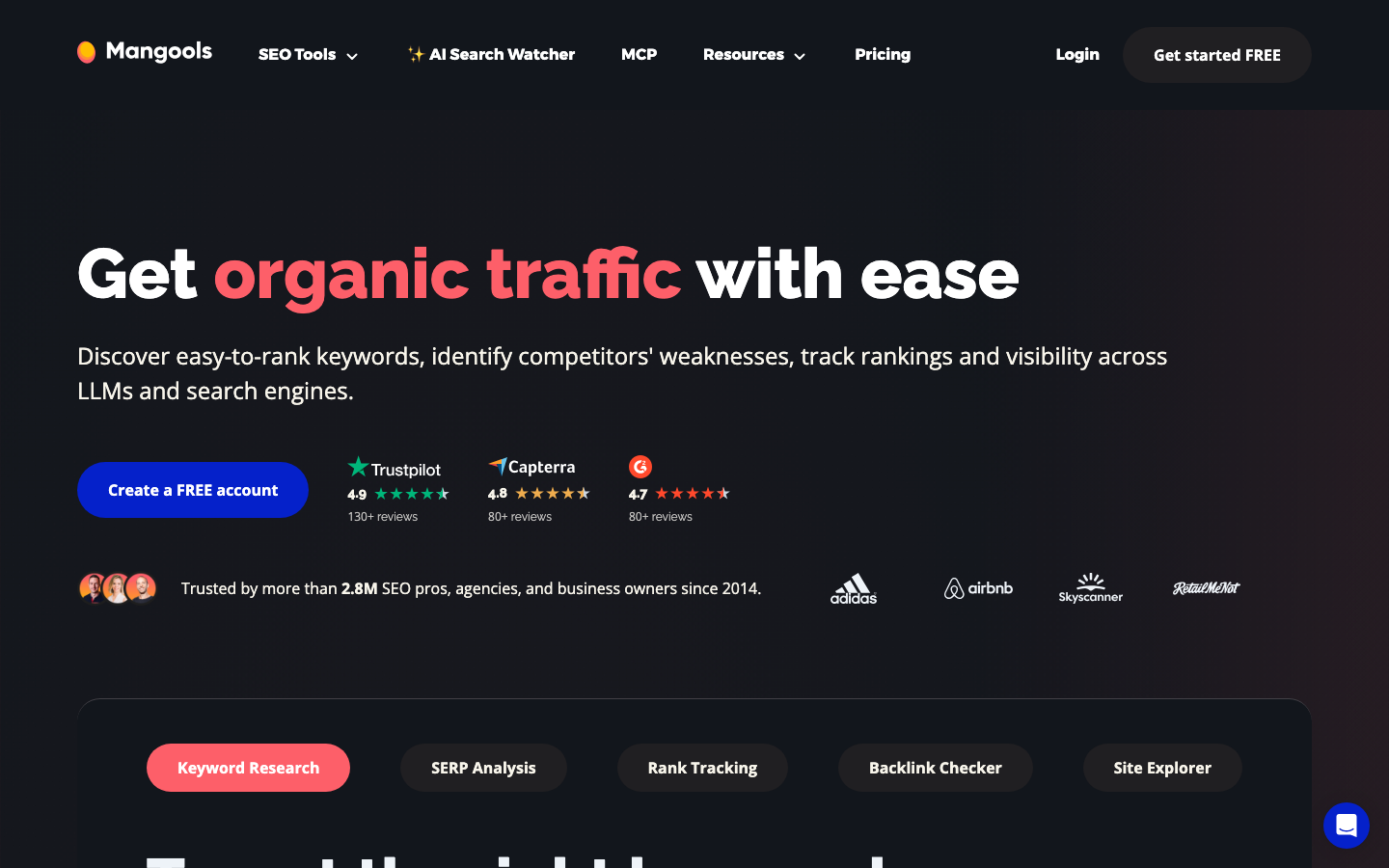
Mangools built AI Search Watcher as an add-on to its existing SEO suite (KWFinder, SERPWatcher, and the rest), and it's positioned as the budget option in this list. Standalone pricing is reported from around $15.60 a month by third-party sources; Mangools doesn't publish exact figures on its static pricing page, and the numbers load dynamically depending on billing currency and cycle. It's included at no extra cost if you're already on a Premium or Agency suite plan.
A free tier and a no-credit-card trial are both available, alongside a separate free “AI Search Grader” tool for a quick one-off check. Best for teams already using Mangools for keyword research who want a low-cost way to add AI visibility tracking without a second subscription.
For a straight ranked review of the closest sibling category, see our 10 best AI visibility tools comparison, which scores several of the same platforms on features and pricing rather than measurement methodology.
More tools worth knowing about
A handful of other platforms show up repeatedly in independent comparisons but didn't make the depth cut above. They're still worth a look if the eight above don't fit your budget or engine list: ZipTie.Dev and Gumshoe.AI, both cited across multiple third-party roundups as smaller-footprint alternatives; Hall, an AI-visibility platform aimed at PR and comms teams; Rankability, which tracks mentions and citations across four to nine platforms with a competitor-intelligence view of up to 25 brands per response; and Evertune, which takes a distinct approach by blending AI-response tracking with a 25-million-person consumer survey panel rather than relying on prompt data alone.
Is there a free way to check AI search visibility?
Yes. Google Search Console has a free, first-party AI-features filter that shows how your pages perform when Google's own AI Overviews and AI Mode surface them in search, no third-party tool required. It only covers Google's AI surfaces, not ChatGPT, Perplexity, or Claude, but it's the fastest zero-cost starting point before you commit to a paid subscription.
Beyond Search Console, several of the paid tools above offer a genuinely usable free tier: Profound's Trial plan tracks ChatGPT with ten prompts at no cost, AthenaHQ's Essential tier includes a $25 usage credit (about 300 credits), and Mangools offers both a permanent free plan and a no-credit-card trial of AI Search Watcher. None of these free options match a paid plan's engine coverage or refresh frequency, but they're enough to confirm whether your brand shows up in AI answers at all before you pay for deeper tracking.
How to choose a GEO tool
Start with the engines that matter to your audience, not the tool with the longest logo list, admittedly a tempting shortcut when every vendor lists eleven engines on its homepage. If your buyers overwhelmingly use ChatGPT and Google, a five-engine tool covering those well beats an eleven-engine tool that spreads thin.
From there, weigh four things against your budget:
- Data source: does the tool query real, observed prompts, or estimate volume from a model? Ask the vendor directly if the pricing page doesn't say.
- Refresh cadence: daily tracking matters more for fast-moving categories (SaaS, finance, retail) than for evergreen B2B topics that don't change week to week.
- Attribution: can the tool tie a mention back to a site visit, or does it stop at a visibility score you can't connect to revenue?
- Engine fit: match coverage to where your actual buyers search, not the vendor with the biggest logo grid.
A tool that tells you you're mentioned but can't tell you whether that mention drove a visit is only answering half the question. Most teams end up running a paid tool for daily tracking on their top two or three engines, plus Search Console as a free backstop for Google's own AI surfaces. If you'd rather hand the whole workflow to an agency, our breakdown of what GEO services actually cost covers the DIY-vs-agency tradeoff in more detail.
Frequently Asked Questions
What's the difference between a GEO tool and an SEO rank tracker?
An SEO rank tracker measures where your pages rank in traditional search results. A GEO tool measures whether and how an LLM-based AI engine mentions your brand inside a generated answer. That's a different surface entirely, one with no fixed “position” to track. You'll also see this called AEO, answer engine optimization, largely the same category under a different name. Some platforms, like Semrush, now bundle both SEO and GEO/AEO tracking into one product.
Do GEO tools use real AI conversations or simulated ones?
Honestly, it depends on the tool. Profound and SE Visible both emphasize real, observed AI responses as their data source. AthenaHQ uses a proprietary statistical model to estimate prompt volume rather than querying every data point live. Reverse-engineered, SEO-keyword-derived prompts are a faster but less representative middle ground several smaller tools rely on.
How many AI engines should a GEO tool track?
Enough to cover where your actual audience searches, not the maximum available. Entry-level plans across this category typically cover three to five engines (usually ChatGPT plus one or two of Google AI Overviews, Perplexity, or Copilot), while enterprise tiers extend to nine or eleven, adding Claude, Gemini, Grok, Meta AI, and DeepSeek.
Is there a free GEO tool?
No fully-featured one, no. Every paid platform in this category gates daily tracking and full engine coverage behind a subscription. What you'll get for free is a limited trial or a narrower first-party option, covered in the free-tools section above.