
An AI search engine is a search tool that uses a large language model to read the web and answer in natural language, with citations, instead of returning a ranked list of links. That definition sounds simple, but it hides the one question that actually matters when you pick one: can you trust what it’s telling you? In the most rigorous independent test run so far, a Columbia Journalism Review study found that AI search tools got citations wrong more than 60% of the time on average, with the best performer still wrong more than a third of the time. This guide ranks eight of the most-used AI search engines not on speed or polish, but on the two things that decide whether you can act on their answers: how transparently they show their sources, and how often independent researchers have caught them getting those sources wrong. Speed doesn’t matter much if you can’t trust what you’re being shown.
How We Evaluated These AI Search Engines
Every tool below is judged on the same three criteria, in this order of weight:
- Citation transparency: does the tool show inline, clickable sources for factual claims, or does it just assert things?
- Measured accuracy: has the tool been directly tested in an independent, named study, and what did that study find?
- Access and cost: what do you actually get for free, and what does the next tier up cost as of 2026?
Two studies do most of the evidentiary work in this guide: the Tow Center for Digital Journalism’s “AI Search Has a Citation Problem” (Columbia Journalism Review, published March 2025) and the BBC/EBU “News Integrity in AI Assistants” report (published October 2025). This kind of sourcing scrutiny matters beyond just picking a search tool, too: the same citation-transparency gap is a big part of why getting cited accurately in AI search has become its own discipline for brands and publishers. Both studies are detailed in full in the section below, and every per-tool verdict that follows references them directly instead of repeating unverified marketing claims. That’s a deliberate, non-negotiable rule for this guide: no accuracy claim gets in without a named source behind it.
The Best AI Search Engines at a Glance
If you only read one section, read this one. Prices are current as of September 2026 and checked directly against each vendor’s own pricing page where one exists.
| Tool | Starting price | Best for | Citation-accuracy signal |
|---|---|---|---|
| Perplexity | Free / $20 Pro / $200 Max | Cited, verifiable everyday research | 37% citation-error rate, lowest of 8 tools tested (Tow Center) |
| ChatGPT Search | Free / $20 Plus | Everyday research inside a chat workflow you already use | 67% citation-error rate (Tow Center); rarely signals uncertainty |
| Google AI Mode | Free (advanced features need Google AI Pro/Ultra) | Search integrated with the rest of Google | Gemini scored worst of 4 assistants tested, 76% significant-issue rate (BBC/EBU) |
| Microsoft Copilot | Free (Copilot Pro retired; advanced features moved into Microsoft 365 Premium, $19.99/mo) | Free everyday search with built-in citations | Sourcing-issue rate under 25%, second-best of 4 tools tested (BBC/EBU) |
| Kagi | $5 Starter / $10 Professional / $25 Ultimate | Privacy-first, ad-free, user-funded search | Not directly tested in either study; no-ads/no-data-selling model is a structural trust signal, not a measured one |
| Brave Search (Leo) | Free / $14.99 Leo Premium | Privacy-first search built into a browser | Not directly tested in either study |
| Consensus | Free (20 searches/mo) / ~$10-15 Pro / $45 Deep | Academic and peer-reviewed research | Not directly tested in either study; sources exclusively from 200M+ peer-reviewed papers by design |
| Grok | Free / $8 X Premium / $30 SuperGrok / $40 X Premium+ | Real-time X/social data | 94% citation-error rate, Grok-3, worst of 8 tools tested (Tow Center) |

What the Research Says About AI Search Accuracy
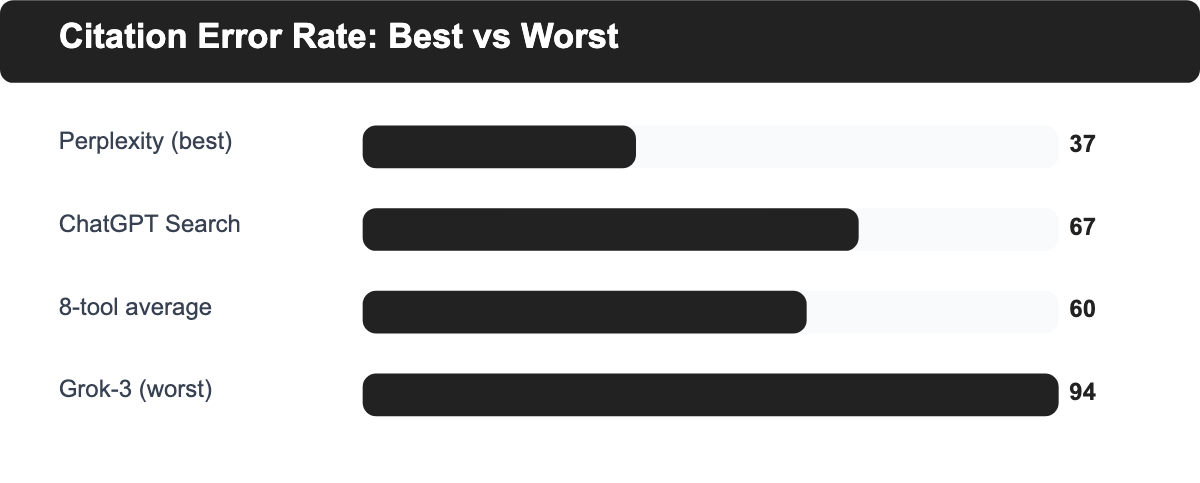
Perplexity had the lowest citation-error rate of any tool tested, 37%, in the most detailed independent study run on this topic so far, and that single fact tells you almost everything you need to know about the state of AI search: even the best tool is still wrong more than a third of the time, and none of them are accurate enough to skip verification on anything that matters.
The Tow Center for Digital Journalism at Columbia University ran the study. Researchers fed 1,600 direct excerpts from real news articles, drawn from 20 publishers, into eight AI search tools (ChatGPT Search, Perplexity, Perplexity Pro, Gemini, DeepSeek Search, Grok-2, Grok-3, and Copilot) and asked each one to identify the source’s headline, publisher, publish date, and URL. Perplexity’s free tier had the lowest error rate at 37%. ChatGPT Search was wrong 67% of the time. Grok-3 was wrong 94% of the time, the worst of the eight. Averaged across all eight tools, more than 60% of citations were incorrect.
The most counterintuitive finding: premium, paid tiers did not perform better. Several premium models had higher error rates than their free counterparts, because they gave confident, definitive wrong answers instead of declining to answer when they weren’t sure. ChatGPT, for example, incorrectly identified 134 articles across the test set but signaled a lack of confidence only 15 times. Content licensing deals didn’t fix the problem either: even publishers with direct licensing agreements in place had their content frequently misattributed or linked to syndicated copies rather than the original. In one telling detail, Perplexity correctly identified 30% of National Geographic excerpts even though National Geographic was blocking Perplexity’s crawler at the time, which shows these tools sometimes source content through channels the publisher didn’t intend and can’t audit.
A second, larger study confirms the pattern outside the news-citation-specific test. The BBC and the European Broadcasting Union published “News Integrity in AI Assistants” in October 2025, the largest study of its kind: 22 public service media organizations across 18 countries, working in 14 languages, had professional journalists evaluate more than 3,000 real responses from ChatGPT, Copilot, Gemini, and Perplexity against accuracy, sourcing, and context criteria. Forty-five percent of all answers had at least one significant issue. Thirty-one percent had a serious sourcing problem, most often misattributing information to a news source that never reported it. Twenty percent contained a major accuracy issue, including hallucinated details and outdated information presented as current. Gemini performed worst by a wide margin: 76% of its responses had a significant issue, more than double the rate of the other three assistants, driven mainly by a 72% sourcing-issue rate.
Why does this happen? The short version is that these tools are only as accurate as the retrieval step that grounds their answer in real source text. When a tool retrieves the right passage and quotes it faithfully, the answer tends to hold up. When it paraphrases from memory, blends two sources together, or can’t actually access the page it’s citing, the citation looks identical to a good one on screen but the underlying claim can be wrong, outdated, or attributed to the wrong outlet entirely. None of the eight tools in the Tow Center study, and none of the four in the BBC/EBU study, reliably tell you which situation you’re in.
Perplexity: Best Overall for Cited, Verifiable Answers
Perplexity is the most citation-transparent AI search engine available, and it backs that reputation up with the lowest measured citation-error rate of any tool tested (37% in the Tow Center study, versus 67% for ChatGPT Search and 94% for Grok-3). Every factual claim in a Perplexity answer carries an inline, numbered citation linking directly to the source page, which makes spot-checking fast even when the underlying claim turns out to be wrong.
The free tier covers unlimited basic search with citations. Pro ($20/month) adds more searches, file uploads, and access to a wider set of underlying models. Max ($200/month) is aimed at power users: it removes the Labs query quota, adds Perplexity Computer (an orchestration layer that routes complex tasks across roughly 19 specialized models), and includes Model Council, which runs one query across three frontier models simultaneously and shows where they agree or diverge, useful for exactly the kind of fact-checking this guide is about.
Where it lacks: even Perplexity’s 37% error rate means more than one in three answers needs independent verification before you rely on it for anything consequential. It’s not a pass, it’s just the best score on the board. It also leans heavily on Reddit as a source for recent or opinion-adjacent queries, which is useful for sentiment but isn’t a substitute for a primary source.
ChatGPT Search: Best for Everyday Research Inside a Chat Assistant
ChatGPT Search is the right pick if you already live inside ChatGPT for other work and want search folded into the same interface, but go in aware of its accuracy profile: a 67% citation-error rate in the Tow Center study, and a pattern of answering confidently rather than flagging uncertainty (only 15 low-confidence signals across 134 wrong answers in the same test).
The free tier includes unlimited text chats on OpenAI’s current base model with search built in, though with tighter limits on uploads, voice, and deep research. Plus ($20/month) unlocks the full reasoning model lineup, expanded Deep Research runs, and higher usage ceilings across the board. Pro tiers start higher still and are aimed at heavy research and coding workloads rather than casual search.
Where it lacks: citations are inconsistent. They’re sometimes present and verifiable, sometimes omitted entirely even when the model is actively browsing. If you need a citation you can click and check, don’t assume ChatGPT Search always provides one.
Google AI Mode: Best for Search Integrated with the Rest of Google
Google AI Mode is the conversational layer now built into Google Search itself, running on a Gemini model and grounded against Google’s own search index, Knowledge Graph, and Shopping Graph. It expanded to free access in nearly 200 countries by Google I/O 2026, though Deep Search and some personalization features still require a Google AI Pro or AI Ultra subscription.
Where it lacks: in the BBC/EBU study, Gemini was the weakest of the four assistants tested by a wide margin, with a 76% significant-issue rate versus well under half that for the others, and the gap was driven almost entirely by sourcing errors (72% of Gemini’s responses had a sourcing problem). If you use AI Mode for anything news-adjacent, treat the citation as a starting point for your own check, not a finished answer.
Microsoft Copilot: Best Free Option with Built-In Citations
The free consumer version of Copilot gives you AI chat with web-grounded answers and clickable citations at no cost, and it was the second-best performer of the four assistants in the BBC/EBU study, with a sourcing-issue rate under 25%, well behind Gemini’s 72%.
One thing worth knowing if you’ve used Copilot before: Copilot Pro, the old $20/month consumer upgrade, was retired. It closed to new signups in late 2025 and support for existing subscribers ended August 1, 2026. The advanced features it used to offer now live inside Microsoft 365 Premium, at $19.99/month, which also bundles Copilot into Word, Excel, and the rest of the Office apps.
Where it lacks: it’s a solid, free, reasonably well-sourced option, but it isn’t the most accurate tool in either study, and the Copilot Pro retirement means anyone who’s comparing “Copilot Pro” pricing against older reviews is looking at a discontinued product.
Kagi: Best for Privacy and User-Funded, Ad-Free Search
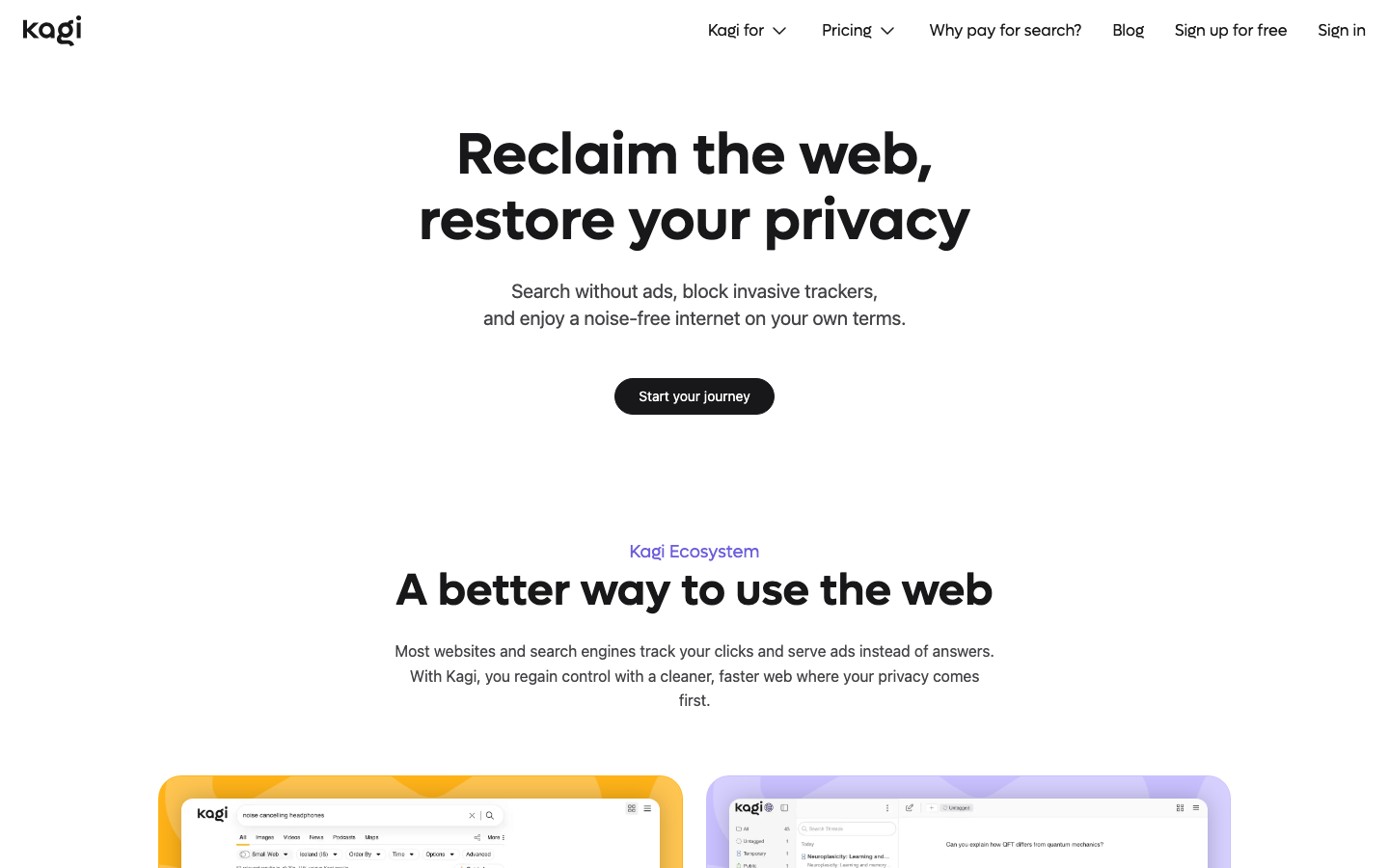
Kagi takes a different approach to trust entirely: instead of an ad-supported or data-monetized model, it’s a paid, user-funded search engine with no ads and no tracking. Kagi Assistant, its AI layer, wasn’t part of either the Tow Center or BBC/EBU study, so there’s no independent citation-accuracy figure to cite here, but its business model is a structural trust signal in its own right, since Kagi has no advertiser or data-buyer relationship that could bias what it surfaces.
Pricing runs Starter at $5/month (300 searches), Professional at $10/month (unlimited searches, Kagi Assistant in Quick mode), and Ultimate at $25/month, which unlocks Kagi Assistant’s Research mode with access to a choice of flagship models including Claude, GPT, Gemini, DeepSeek, and Mistral. Unused monthly search allowances roll forward as credit rather than expiring.
Where it lacks: there’s no free tier beyond a 100-search trial, and because it hasn’t been included in the major citation-accuracy studies, you’re trusting its privacy-first design rather than a measured accuracy number.
Brave Search (Leo): Best Built Into a Privacy Browser

Brave’s Leo is a free AI assistant built directly into the Brave browser, with a privacy architecture that routes queries through a proxy that strips identifying information before it reaches the model, and no requirement to create an account. It handles summarization, translation, and question-answering across web pages, PDFs, and documents you’re already viewing.
The free tier includes full chat access across several open and lightweight models. Leo Premium ($14.99/month) unlocks larger, more capable models and higher usage limits.
Where it lacks: like Kagi, Leo wasn’t part of either headline accuracy study, so there’s no independent citation-error figure attached to it. It’s a genuinely private option, but “private” and “accurate” are two different claims, and only the first one is verified here.
Consensus: Best for Academic and Peer-Reviewed Research
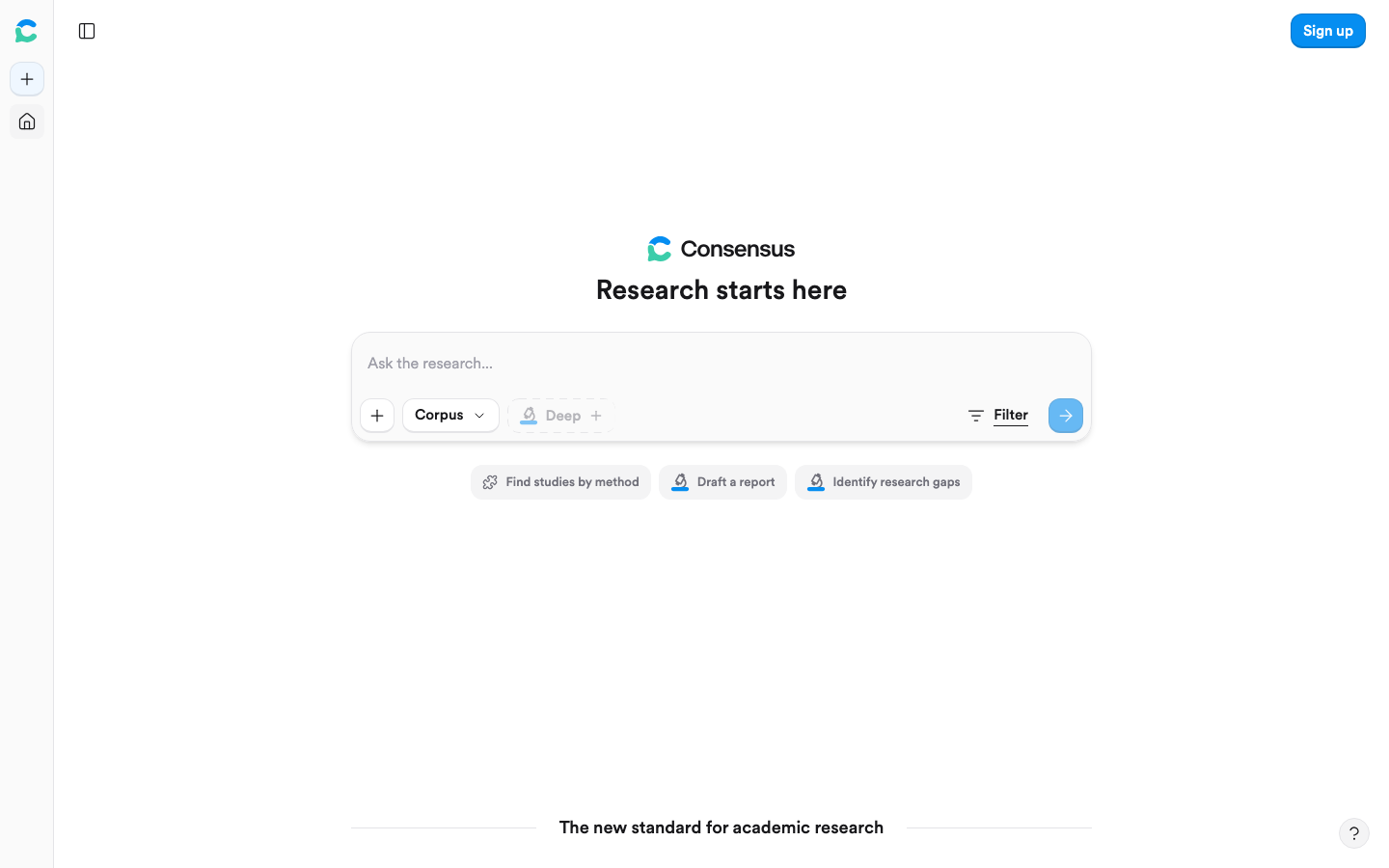
Consensus is the one tool on this list built for a narrower job: it searches over 200 million peer-reviewed papers and uses an LLM to synthesize findings with citations back to the actual studies, rather than crawling the open web. For academic or scientific questions, that narrower scope is an accuracy advantage in itself, since every source it can possibly cite has already passed peer review.
The free tier includes 20 AI-powered searches per month. Paid plans run roughly $10-15/month for Pro (unlimited search plus a monthly allotment of deeper “Deep Review” reports) up to $45/month for the Deep tier, with discounts available for verified students, faculty, and clinicians.
Where it lacks: it’s not a general-purpose search engine, and it wasn’t part of either headline citation-accuracy study, so its accuracy claims rest on its sourcing design rather than independent measurement. If your question isn’t academic, this isn’t the right tool.
Grok: Best for Real-Time Social/X Data, Weakest on Citation Accuracy
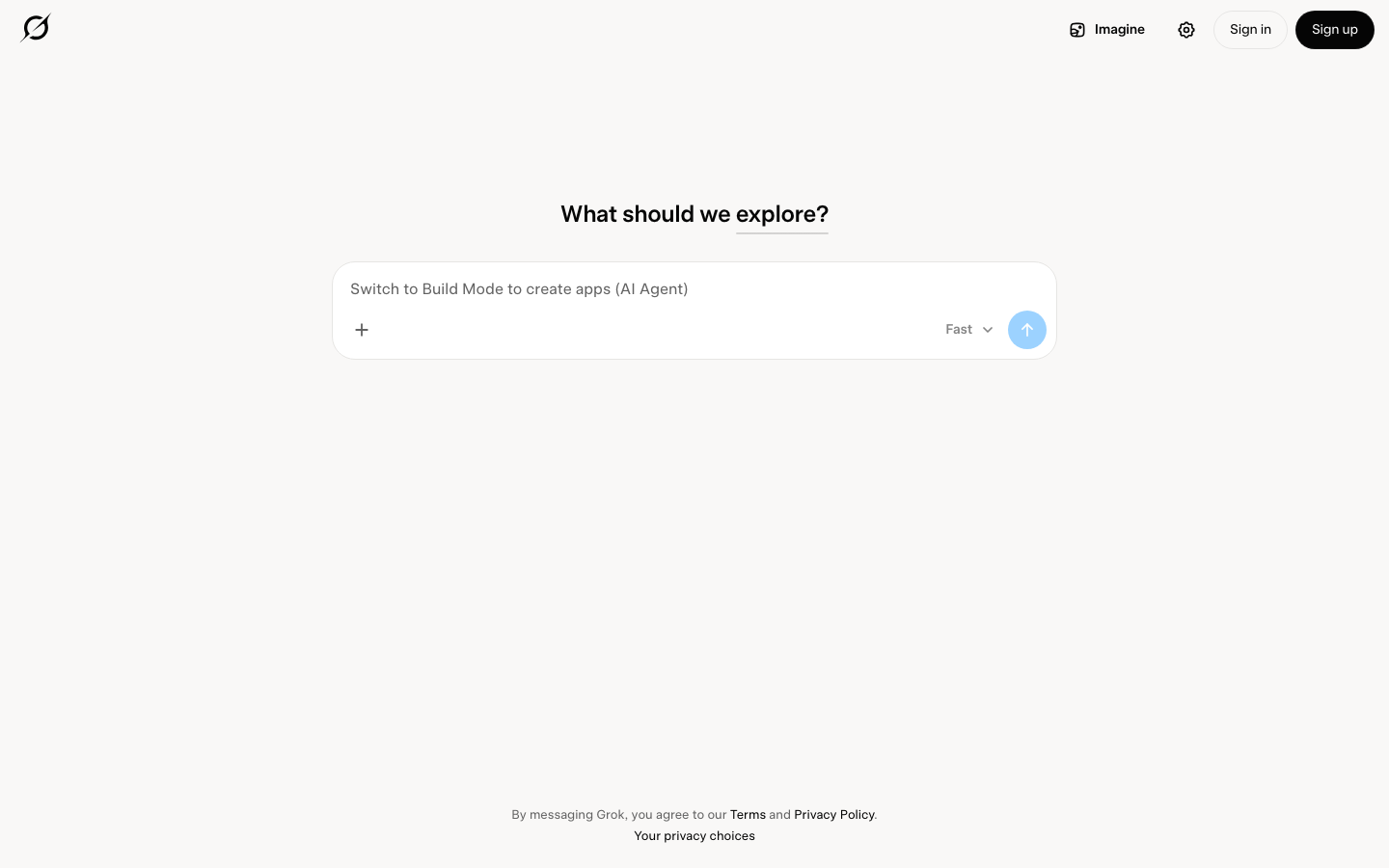
Grok’s strength is genuinely real-time access to X (formerly Twitter) conversation and posts, which makes it useful for tracking a breaking story or public sentiment as it happens. If it’s a more general-purpose chat assistant you’re after instead of a citation-focused search tool, our guide to ChatGPT alternatives covers that comparison in more depth. That same real-time, social-first sourcing is very likely why it also posted the worst citation-accuracy result of any tool in the Tow Center study: Grok-3 was wrong 94% of the time when asked to correctly identify a news article’s headline, publisher, date, and URL.
Grok is free to use at grok.com or through the X app with usage limits. Paid access is split across two tracks: through X itself, X Premium ($8/month) gives light Grok access, while X Premium+ ($40/month) adds full access. Through grok.com directly, SuperGrok ($30/month) is the standalone path to full Grok capability, with SuperGrok Heavy ($300/month) at the top end for the highest usage tiers.
Where it lacks: if sourcing accuracy on news or factual claims matters for your use case, this is, plainly, the tool the evidence says to trust least among the eight tested. Use it for real-time social monitoring, not for anything you need to cite yourself.
How to Choose the Right AI Search Engine for You
- If you want the most verifiable everyday answers: use Perplexity. It has the best measured citation-accuracy record of any tool tested.
- If you’re already inside ChatGPT for other work: ChatGPT Search is convenient, but verify anything important yourself given its 67% citation-error rate.
- If you want search folded into Google itself: Google AI Mode is free and deeply integrated, but double-check sourcing given Gemini’s weak BBC/EBU result.
- If you want a free option with reasonably solid citations: Microsoft Copilot is the strongest free-tier pick of the mainstream assistants.
- If privacy and an ad-free, user-funded model matter most: choose Kagi or Brave’s Leo.
- If your question is academic or scientific: use Consensus, which only cites peer-reviewed literature.
- If you need real-time social/X data and can verify claims independently: Grok is useful for that narrow job, but not for anything you need to cite as fact.
FAQ
Is any AI search engine 100% accurate?
No, and it’s not close. In the most detailed independent test run so far, citation error rates across eight tools ranged from 37% (Perplexity, the best performer) to 94% (Grok-3, the worst), with an overall average above 60%. Every AI search engine’s answers should be treated as a starting point for verification, not a finished, citable fact.
Is there a free AI search engine that’s actually accurate?
Perplexity’s free tier includes the same citation-transparent format as its paid tiers and carries the lowest measured error rate of any tool tested. Microsoft Copilot’s free tier is also a reasonably solid option, with a sourcing-issue rate under 25% in the BBC/EBU study, well ahead of Gemini’s 72%.
What’s the difference between an AI search engine and Google’s AI Overviews?
AI Overviews is a summary box that appears above traditional search results for some queries. Google AI Mode, by contrast, is a fully conversational search experience that replaces the traditional results page with a chat-style interface grounded in Google’s search index, Knowledge Graph, and Shopping Graph, and it’s the AI Mode/Gemini combination that was tested in the BBC/EBU study referenced throughout this guide.
Why did Perplexity correctly identify content from a publisher that had blocked its crawler?
In the Tow Center study, Perplexity correctly identified 30% of excerpts from National Geographic even though National Geographic was actively blocking Perplexity’s crawler. This suggests these tools can sometimes source content through channels, like syndication partners or cached copies, that the original publisher didn’t intend and can’t fully audit or control.
Is Copilot Pro still available?
No, it isn’t. Copilot Pro, the former $20/month consumer upgrade, closed to new signups in late 2025 and support for existing subscribers ended August 1, 2026. Its advanced features now live inside Microsoft 365 Premium at $19.99/month.

4 thoughts on “Best AI Search Engines: Compared on Sources and Accuracy”